
The Mitzvah of Kavod and Simcha: Some Poskim[1] rule that one is obligated in the Mitzvah of Kavod [and Simcha[2]] on Rosh Chodesh, just as one is obligated on Yom Tov. _____________________________ [1] Machazik Bracha 419/2; Ashel Avraham Butchach Tinyana 419; See Rameh Mipuno 79 The reason: As Rosh Chodesh […]
Which after blessing is to be recited first; Borei Nefashos or Meiyn Shalosh?
Which after blessing is to be recited first; Borei Nefashos or Meiyn Shalosh? The after blessing of Meiyn Shalosh is of greater status than the after blessing of Borei Nefashos. Accordingly, the Poskim[1] rule that one is to be precede the blessing of Meiyn Shalosh to the blessing of Borei […]
One who washes on bread directly after Havdala
One who is washing on bread directly after Havdala: If one is eating a meal directly after Havdala is he to say an after Bracha on the Havdala wine?[1] If one will not be drinking wine during the meal and does not plan on saying Birchas Hamazon with a Kos […]
Kiddush Levana on Motzei Yom Kippur
Kiddush Levana: One does not recite Kiddush Levana prior to Yom Kippur.[1] It is rather to be recited on Motzei Yom Kippur.[2] Eating and changing clothing before Kiddush Levana on Motzei Yom Kippur:[3] When reciting Kiddush Levana on Motzei Yom Kippur, one does not need to eat prior to saying […]
The pessimist versus the optimist
The pessimist versus the optimist:[1] Some people have a natural tendency towards pessimism, while others towards optimism. Interestingly, often those who have a good life with many blessings and no true suffering, have a pessimistic outlook at life in general and to their own predicament, in particular. They expose all […]
May a man listen to the recording of a woman singing, such as on a music player or radio?
May a man listen to the recording of a woman singing, such as on a music player or radio?[1] Some Poskim[2] rule it is permitted to hear a woman sing through a radio or recording if he does not know what she looks like.[3] Other Poskim[4] rule it is permitted […]
Importance of learning Torah at night
Importance of learning Torah at night:[1] It is a Biblical Mitzvah and command to learn Torah both by day and night.[2] Furthermore, one must be careful in his Torah study at night even more than during the day, and one who is not careful in this, his punishment is great.[3] […]
Davening to Hashem to grant one the attribute of Bitachon
Davening to Hashem to grant one the attribute of Bitachon:[1] The attribute of Bitachon has the power to draw blessing for the matter in which one is trusting in. For example, if one trusts in Hashem that he will find a good Parnasa, then even if he does not currently […]
With which foot is one to take three steps back after Shemoneh Esrei?
With which foot is one to take three steps back after Shemoneh Esrei?[1] When one takes three steps back after Shemoneh Esrei, he is to begin with his left foot.[2] A lefty:[3] One who his is left footed[4] is to begin with his right foot when he takes three steps […]
Washing hands if wearing nail polish
Is nail polish considered a Chatzitza for washing hands for bread and in the morning?[1] Women who are accustomed to dye their hands for beauty purposes, and the like, the dye is not considered an interval [between the water and the hand] and the washing is valid. This applies even […]
May one Daven or learn while hearing the voice of a woman
Hearing the voice of a woman during learning or Davening:[1] The singing[2] voice of a woman is [Rabbinically[3]] an Erva.[4] This applies whether she is single[5] or married, and even towards the voice of one’s own wife [even while she is pure[6]].[7] [This applies to woman of all ages, whether […]
The general prohibition of Erva during Davening and learning Torah
This article is a first draft summary of the Shulchan Aruch Harav and is pending further review of additional sources. The general prohibition of Erva: Biblical prohibition of seeing Erva:[1] It is Biblically forbidden for one to pray or learn Torah within sight of feces or an Ervah which is […]
Every marital union creates new souls
Every union creates new souls:[1] Every marital union between a husband and wife which takes place in a form of holiness creates a Jewish soul. This soul, may enter the body of another child who is born, if that woman does not become pregnant with the soul that they created. […]
The spiritual children of Avraham and Sarah
The spiritual children of Avraham and Sarah:[1] The Zohar explains that although Sarah was physically barren, she merited to have many spiritual children. This is learned from the verse which states “Vethi Sarah Akarah, Ein Lah Velad/And Sarah was barren, she had no children.” This means that although she did […]
May one recite Birchas Hamazon in English and other languages?
The language-May one recite Birchas Hamazon in English and other languages?[1] Birchas Hamazon may be recited in any language [that he understands, as will be explained].[2] Practically, however, the custom is to recite Birchas Hamazon in Lashon Hakodesh, even if he does not understand the language [as will be explained].[3] […]
Understanding the words of Birchas Hamazon & the preferred language it is be said in
Understanding the words of Birchas Hamazon & the preferred language it is be said in:[1] Birchas Hamazon may be recited in any language [that he understands, as will be explained].[2] However, if one does not know the meaning of the words that he is saying in Birchas Hamazon, such as […]
Understanding the words of Birchas Hamazon & the preferred language it is be said in
Understanding the words of Birchas Hamazon & the preferred language it is be said in:[1] Birchas Hamazon may be recited in any language [that he understands, as will be explained].[2] However, if one does not know the meaning of the words that he is saying in Birchas Hamazon, such as […]
Parshas Lech Lecha- Summary of the Parsha
This article is an excerpt from our Sefer Buy now on Amazon.com Parshas Lech Lecha Pesukim: 126 [Siman: נמל”ו] Haftorah: Yeshayahu 40:27-41:16 Number of Mitzvos: There is a total of One Mitzvah in Parshas Lech Licha. There is One positive command and Zero negative commands. The following are […]
100 blessings on Yom Kippur
How does one accumulate 100 blessings on Yom Kippur?[1] Every Jew is obligated to recite one hundred blessings each day.[2] On Yom Kippur, due to the loss of several blessings from Shemoneh Esrei, and from lack of food and drink, one needs to accumulate these blessings from other sources. Aside […]
Davening or learning Torah in view of a woman’s hair
This article is a first draft summary of the Shulchan Aruch Harav and is pending further review of additional sources. Seeing the hair of a woman:[1] The hair of a woman is an Erva, and hence one may not learn Torah or Daven in view of the hair of a […]
How to say Hashem’s name when in reference to deities, such as in the words “Elokim Acheirim”:
How to say Hashem’s name when in reference to other gods, such as in the words “Elokim Acheirim”: From the letter of the law, it is permitted to recite the actual name “Elohim” when in reference to deities and not to Hashem, such as in the words “Elohim Acheirim.”[1] Furthermore, […]
Pregnant and nursing women Fasting on Yom Kippur
Pregnant and nursing women:[1] A pregnant or nursing woman must fast on Yom Kippur for the entire day [just like any other person]. [There is no allowance for them to eat or drink less than the Shiur, unless it is a case of danger, as will be explained. This applies […]
Men Davening and learning in presence of a woman
This article is a first draft summary of the Shulchan Aruch Harav and is pending further review of additional sources. Men learning or Davening in view of the body of a woman:[1] Face and arm, up until elbow:[2] The face and the arms, up until the elbow, of a woman […]
Having a Bracha Achrona count for only a specific food
Having a Bracha Achrona count for only a specific food: Example: One at a Kezayis of a piece of chicken or other food and drank a Revius of water and desires to recite a Borei Nefashos on the chicken, but to continue drinking the water. What is one to do? […]
Must a not married woman [Besula, Beula, divorcee, or widow] cover her hair?
Must a not married woman [Besula, Beula, divorcee, or widow] cover her hair? It is forbidden for a married woman, or single girl, to walk in public with uncovered hair.[1] The definition of the term single is as follows: Divorcee/widow:[2] The term single written above refers to a widow or […]
Must a divorcee, or widow cover her hair?
Must a divorcee, or widow cover her hair? It is forbidden for a woman who was once married, such as a widow or divorcee, to walk in public with uncovered hair, just as is the law regarding a married woman.[1] [Some Poskim[2] rule that this obligation for a widow or […]
Must a divorcee, or widow cover her hair?
Must a divorcee, or widow cover her hair? It is forbidden for a woman who was once married, such as a widow or divorcee, to walk in public with uncovered hair, just as is the law regarding a married woman.[1] [Some Poskim[2] rule that this obligation for a widow or […]
What is the law if a drop of hot milk or chicken soup spritzed onto a dairy/meaty vessel?
* This article is an excerpt from the above Sefer *As an Amazon Associate I earn from qualifying purchases. Buy in Paperback or Kindle Buy on Apple Books Purchase on our website WhatsApp Facebook Twitter Telegram Sponsor an Article https://vimeo.com/240391367 What is the law if a drop of hot milk […]
The law of Iruiy Keli Rishon-Nifsak Hakiluach:
Iruiy Keli Rishon-Nifsak Hakiluach: Definition of Nifsak Hakiluach: Food poured from a Keli Rishon is defined as Iruiy Keli Rishon, and can have two different Halachic statuses, depending on whether it was Nifsak Hakiluach. This term means as follows: If the flow of liquid from the Keli Rishon was no […]
Having separation between heart and Erva during prayer and learning
This article is a first draft summary of the Shulchan Aruch Harav and is pending further review of additional sources. Having separation between one’s heart and Erva during learning and Davening:[1] The Sages added that not only is it forbidden for one’s eyes to see the Erva during prayer or […]
Using Maaser money to pay tuition of Torah education
Using Maaser money to pay tuition for school/Yeshiva/seminary or another Torah education:[1] The letter of the law:[2] If one cannot afford[3] to pay the tuition for Torah education from non-Maaser or non-Chomesh funds, it is permitted for him to use his Maaser or Chomesh money [which he separated], for the […]
Paying owed bus fares in Israel
Paying owed bus fares: It is forbidden to enter a person’s property without their permission.[1] This applies whether the property is owned by a Jew or a gentile.[2] It goes without saying that one may not make use of facilities within another’s property without their permission.[3] [Accordingly, it is forbidden […]
The after blessing of Meiyn Shalosh if ate fruits of seven Minim, and Mezonos, and drank wine, and only mentioned one of them
What is the law if one mentioned one of the foods only in the beginning or only in the end of Meiyn Shalosh?[1] Example: One ate Mezonos and drank wine and said Al Hamichya, without saying Veal Hagefen, and in the conclusion, he remembered and said Al Hamichya Veal Hagefen? […]
The after blessing of Meiyn Shalosh if ate fruits of seven Minim, and Mezonos, and drank wine
The after blessing-Ate fruits of seven Minim, and Mezonos, and drank wine:[1] One who ate [a Kezayis of] fruits from the seven Minim and ate [a Kezayis of] Mezonos [within Kdei Achilas Peras] and drank [a Revius of] wine is to include all three after blessings in a single blessing […]
Gentiles learning Torah-May one teach Torah to a gentile
May one teach Torah to gentiles?[1] It is [Biblically[2]] forbidden for a gentile to learn Torah, and a gentile who does so is liable for death [in the hands of heaven[3]].[4] It is likewise forbidden to teach a gentile Torah.[5] One who does so, transgresses a positive command[6], and possibly […]
Minyan Versus Zman Tefila-Is it more important to Daven with a Minyan or to Daven within Zman Tefila?
* This article is an excerpt from the above Sefer *As an Amazon Associate I earn from qualifying purchases. Donate Buy in Paperback or Kindle Buy on Apple Books Purchase on our website WhatsApp Telegram Facebook Twitter Sponsor an Article Minyan Versus Zman Tefila-Is it more important to Daven with […]
Davening Mincha after sunset
Davening Mincha past sunset:[1] The prayer of Mincha may be recited until evening.[2] It is disputed amongst Poskim as to the definition of “evening.” Some Poskim[3] rule it is permitted [even initially[4]] to Daven Mincha past sunset, up until Tzeis Hakochavim.[5] Other Poskim[6] rule one may not Daven Mincha past […]
May one pay for an Aliyah using Maaser money?
May one pay for an Aliyah, or other Kibud, using Maaser money:[1] It is permitted to use Maaser money to pay for a Kibbud [i.e. Aliya, Pesicha, Hagba, etc] that was purchased in Shul, if one had intent to do so upon purchasing it.[2] If, however one did not have […]
May a Gentile and one in process of conversion keep Shabbos
May a gentile keep Shabbos?[1] It is forbidden for a gentile to keep Shabbos. It is forbidden for him to keep Shabbos even on a weekday. A gentile who keeps Shabbos is liable. May a gentile who is in the process of conversion keep Shabbos? A gentile who is in […]
Using Maaser money to pay tuition
Using Maaser money to pay tuition for school/Yeshiva/seminary/Camp or another Torah education:[1] The letter of the law:[2] If one cannot afford[3] to pay the tuition for Torah education from non-Maaser or non-Chomesh funds, it is permitted for him to use his Maaser or Chomesh money [which he separated], for the […]
A solar or lunar eclipse-Meaning and blessing
A solar or lunar eclipse: The Talmud[1] states that an eclipse is a bad omen for the entire world.[2] More particularly, a solar eclipse is a bad omen for the gentile nations, while a lunar eclipse is a bad omen for “The enemies of Israel[3].”[4] [Although an eclipse is set […]
Is a blessing recited upon seeing an eclipse?
Is a blessing recited upon seeing a solar or lunar eclipse?[1] No.[2] One is not to say any blessing, including the blessing of Oseh Maaseh Bereishis. __________________________________________ [1] Igros Kodesh 15:260 [printed in Shulchan Menachem 1:355]; Orchos Rabbeinu p. 95 [2] The reason: The Sages never established a blessing for […]
May one eat or drink after candle lighting, before sunset or nightfall of Shabbos?
* This article is an excerpt from the above Sefer Buy in Paperback or Kindle Buy on Apple Books Purchase on our website *As an Amazon Associate I earn from qualifying purchases. WhatsApp Facebook Twitter Telegram Sign up for Daily Distribution Sponsor an Episode Donate May one eat or drink […]
Borrowing a Sefer from a Shul
Borrowing a Shul’s Sefer:[1] An old edict that was founded in ancient congregations is that one may not remove a Tallis or Sefer from the Shul without asking permission from the owners. [This applies even if one can assume that the owner is not particular, nevertheless one must ask permission. […]
Accepting Shabbos in close proximity to the candle lighting:
Accepting Shabbos in close proximity to the candle lighting: Women who light Shabbos candles automatically accept Shabbos upon lighting them. However, men do not automatically accept Shabbos upon lighting the candles. Furthermore, even women, in a time of need, may stipulate to not accept Shabbos upon lighting the candles.[1] Nevertheless, […]
Davening Mincha after accepting Tosefes Shabbos
Davening Mincha after accepting Tosefes Shabbos:[1] One may Daven Mincha even after accepting Tosefes Shabbos, and so is the widespread custom.[2] However, once one has accepted Itzumo Shel Yom [such as Davening Maariv] he may no longer Daven Mincha.[3] _____________________________________________________ [1] Implication of Admur Seder Hachnasas Shabbos who allows Davening […]
What is the law if one accidently Davened the Shemoneh Esrei of Shacharis/Mincha instead of Musaf?
What is the law if one accidently Davened the Shemoneh Esrei of Shacharis/Mincha instead of Musaf? If one intended to Daven Musaf and accidently Davened the Shemoneh Esrei of Mincha, he fulfills his obligation of Mincha and is to Daven Musaf afterwards.[1] Thus, if one accidently Davened the regular Yom […]
Davening Mincha after candle lighting on Erev Shabbos
Davening Mincha after candle lighting on Erev Shabbos:[1] A woman who lights Shabbos candles, and thus accepts Shabbos with her lighting, is to Daven Mincha beforehand.[2] [If she did not do so, and has already lit her candles, then she may not daven Mincha afterwards, and is to rather Daven […]
Stepping on egg shells
Stepping on egg shells: Many are accustomed to abstain from stepping on egg shells due to danger.[1] Accordingly, egg shells are not to be thrown in areas that people walk. There is a story dating back to the Rebbe Maharash regarding this matter.[2] _________________________________________________________________ [1] There is no known source […]
Contemplating G-d’s kindness leads to repentance
The kindness shown to us by G-d is to help us have remorse and repent:[1] The verse[2] states that after the blessing and curse befalls us, we will return to G-d. The question is raised as to how the blessing shown to us by G-d helps us return to G-d? […]
Should one Daven Maariv with a Minyan during Pelag Hamincha versus Davening in private after nightfall?
Davening Maariv with a Minyan during Pelag Hamincha versus Davening in private after nightfall?[1] One who normally Davens Maariv after nightfall who is present by a Minyan that Davens Maariv after Pelag Hamincha, is to Daven with them [if a Minyan will not be available later on[2]], and then repeat […]
Davening Mincha after sunset
Davening Mincha past sunset:[1] The prayer of Mincha may be recited until evening.[2] It is disputed amongst Poskim as to the definition of “evening.” Some Poskim[3] rule it is permitted [even initially[4]] to Daven Mincha past sunset, up until Tzeis Hakochavim.[5] Other Poskim[6] rule one may not Daven Mincha past […]
Omitting Tachanun after Sukkos until Rosh Chodesh Marcheshvon
Tachanun after Sukkos:[1] Tachanun is omitted from Davening from Erev Yom Kippur until the beginning of the month of Cheshvon. Tzidkascha: The prayer of Tzidkascha is not recited on the Shabbos between Erev Yom Kippur and the month of Cheshvon. ___________________________________________________________________ [1] Siddur Admur; Custom brought in Magen Avraham 669:1; […]
What is one to do with the Sechach and Daled Minim after Sukkos?
This article is an excerpt from the above Sefer *As an Amazon Associate I earn from qualifying purchases. Donate Buy in Paperback or Kindle Buy on Apple Books Purchase on our website WhatsApp Telegram Facebook Twitter Sponsor an Article What is one to do with the Sechach and Daled Minim […]
If one mistakenly said Visein Tal Umatar after Sukkos but before the proper time, is he to repeat Shemoneh Esrei?
* This article is an excerpt from the above Sefer Buy in Paperback or Kindle Buy on Apple Books Purchase on our website *As an Amazon Associate I earn from qualifying purchases. WhatsApp Facebook Twitter Telegram Sign up for Daily Distribution Sponsor an Episode Donatehttps://vimeo.com/238251215 If one mistakenly said Visein […]
The obligation of sleeping in the Sukkah and why many [including Chabad Chassidim] are lenient
Sleeping in the Sukkah:[1] The obligation-Letter of the law: Part of the Mitzvah and [Biblical] obligation of dwelling in a Sukkah, is to sleep in the Sukkah throughout all seven days of Sukkos, both by day and night, just as one does in his home throughout the year.[2] It is […]
The obligation of sleeping in the Sukkah and why many [including Chabad Chassidim] are lenient
Sleeping in the Sukkah:[1] The obligation-Letter of the law: Part of the Mitzvah and [Biblical] obligation of dwelling in a Sukkah, is to sleep in the Sukkah throughout all seven days of Sukkos, both by day and night, just as one does in his home throughout the year.[2] It is […]
Laundering clothing on Chol Hamoed if they all became dirty
May one launder his clothing on Chol Hamoed if they all became dirty? The general rule: It is forbidden to launder clothing on Chol Hamoed.[1] This applies even if one is doing so for the sake of wearing the clothing during the Moed and certainly if one is doing so […]
Entering pots into a Sukkah
Entering pots into a Sukkah:[1] [It is permitted to enter pots and pans of food into a Sukkah.[2]] Nonetheless, once the meal has been completed, one is to remove the pots, pans, and plates from the Sukkah, being that after their use they are considered repulsive [and it is belittling […]
Entering pots into a Sukkah
Entering pots into a Sukkah:[1] [It is permitted to enter pots and pans of food into a Sukkah.[2]] Nonetheless, once the meal has been completed, one is to remove the pots, pans, and plates from the Sukkah, being that after their use they are considered repulsive [and it is belittling […]
May women and children help build a Sukkah
May women or children help build the Sukkah?[1] The building of a Sukkah is a fun activity, and great Mitzvah that many enjoy doing each year. Nonetheless, just as there are various laws associated with the validity of a Sukkah, so too regarding its construction. Only men are obligated in […]
Women and children helping build the Sukkah
May women or children even initially help to build the Sukkah?[1] The building of a Sukkah is a fun activity, and great Mitzvah that many enjoy doing each year. Nonetheless, just as there are various laws associated with the validity of a Sukkah, so too regarding its construction. Only men […]
A split Tiyomes-The law if the top middle leaf of a Lulav is split
The law of a split Tiyomes/Center leaf of the Lulav:[1] What is the Tiyomes? In Halacha, special attention is given to the Tiyomus of the Lulav, and the criteria it must fulfill for the Lulav to be Kosher.[2] The term Tiyomes comes from the word “twins”, and refers to the […]
A split Tiyomes-The law if the top middle leaf of a Lulav is split
The law of a split Tiyomes/Center leaf of the Lulav:[1] What is the Tiyomes? In Halacha, special attention is given to the Tiyomus of the Lulav, and the criteria it must fulfill for the Lulav to be Kosher.[2] The term Tiyomes comes from the word “twins”, and refers to the […]
Taking medicine on Yom Kippur
May one take medicine on Yom Kippur?[1] One who is currently sick: If one is bedridden, or feels ill/weak in his entire body, then he may swallow a tasteless or bitter pill [without water, as will be explained].[2] If the pill has a non-bitter taste, then he is to wrap […]
Taking medicine on Yom Kippur
May one take medicine on Yom Kippur?[1] One who is currently sick: If one is bedridden, or feels ill/weak in his entire body, then he may swallow a tasteless or bitter pill [without water, as will be explained].[2] If the pill has a non-bitter taste, then he is to wrap […]
Washing hands after using the bathroom on Yom Kippur:
Washing hands after using the bathroom on Yom Kippur:[1] During non-prayer times:[2] If one urinated and used his hands to wipe away the drops of urine from his feet, or if he defecated and used his hands to clean the excrement, then he may wash his hands up until his […]
Washing hands after using the bathroom on Yom Kippur:
Washing hands after using the bathroom on Yom Kippur:[1] During non-prayer times:[2] If one urinated and used his hands to wipe away the drops of urine from his feet, or if he defecated and used his hands to clean the excrement, then he may wash his hands up until his […]
The Yom Tov of Erev Yom Kippur
The Yom Tov of Erev Yom Kippur:[1] From the letter of the law Erev Yom Kippur is not considered a Yom Tov at all.[2] Nevertheless, it is customary to treat it like a Yom Tov.[3] [It is for this reason that Erev Yom Kippur contains various laws similar to a […]
Women shaking Lulav
Are women obligated in shaking Lulav? Women are exempt from the Mitzvah of shaking Lulav.[1] Nevertheless, if they desire to shake Lulav, they may do so.[2] Practically, women have accepted upon themselves the Mitzvah shaking of Lulav as an obligation.[3] [Accordingly, women are to be particular to shake Lulav each […]
Are women obligated in shaking Lulav?
Are women obligated in shaking Lulav? Women are exempt from the Mitzvah of shaking Lulav.[1] Nevertheless, if they desire to shake Lulav, they may do so.[2] Practically, women have accepted upon themselves the Mitzvah shaking of Lulav as an obligation.[3] [Accordingly, women are to be particular to shake Lulav each […]
The order of building the Sukkah-Setting up the walls before the Sechach
8. The order of building-Setting up the walls before the Sechach?[1] One is not to place the Sechach over the [frame of the] Sukkah prior to building the [Halachically valid] walls.[2] Bedieved, if first placed the Sechach: If one transgressed and first placed the Sechach over the frame and only […]
The length of the straps of the Tefillin Shel Rosh
Length of straps of Shel Rosh: The straps of the Tefillin Shel Rosh are to be drooped in front of the person.[1] The Geonim received a tradition that the straps must be long enough to reach the naval, or slightly above it.[2] More specifically, the right strap is to reach […]
Mamar 3-Relationship between Rosh Hashanah and Yom Kippur
“Hayom Hazeh…” [Likkutei Torah p. 41a] This Mamar discusses the verse in the Parsha that describes the covenant made with Bnei Yisrael prior to entering Eretz Yisrael. The verse states that this covenant took place “on this day”. The Mamar discusses the connection between this covenant and Eretz Yisrael. This […]
Mamar 2-Teshuvah only works in this world
“Tzav Es Bnei Yisrael Veamarta Aleihem…” [Likkutei Torah p. 150] Teshuvah can only be performed in this world: It states that, Hayom Lasosam Ulemachar Lekabel Sechara, that today we are commanded to do the Mitzvos and tomorrow we will receive their reward. It is only in this world below that […]
Mamar in Likkutei Torah “Shuvah Yisrael…”
“Shuvah Yisrael…” [Likkutei Torah p. 64a] The Mamarim of Shabbos Shuvah expound on the heading of the Haftorah for this Shabbos, which begins with the words “Shuvah Yisrael.” The main theme of the Ten Days of Repentance is the Avoda of Teshuvah. During these ten days, we are told that […]
Checklist and Summary of Laws of Yom Kippur
Erev Yom Kippur Kaparos Buy two 24 hour candles. One for the shul for married men and one for the house for Havdala. Davening: No Tachanun/Avinu Malkeinu/Mizmor Lesoda in Shacharis No Avinu Malkeinu even if falls on Erev Shabbos Receive Lekach Ask forgiveness from people that you hurt Mitzvah to […]
Leaving a light on in the marital bedroom on Yom Kippur
Leaving a light on in the bed room of married couples:[1] If a couple is leaving a light on in their house [on the night of Yom Kippur], then they are required to also leave a light on in their bedroom.[2] This applies both in areas that are accustomed to […]
Leaving a light on in the marital bedroom on Yom Kippur
Leaving a light on in the bed room of married couples:[1] If a couple is leaving a light on in their house [on the night of Yom Kippur], then they are required to also leave a light on in their bedroom.[2] This applies both in areas that are accustomed to […]
One who forgot to say Hamelech Hamishpat
One who forgot to say Hamelech Hamishpat:[1] In Shemoneh Esrei of Aseres Yimei Teshuvah the tenth blessing of Hashiva Shofteinu concludes with the words “Hamelech Hamishpat” in place of “Melech Ohave Tzedaka Umishpat”.[2] [This emphasizes that Hashem is the King that is currently in judgment at this time.[3]] If one […]
One who forgot to say Hamelech Hamishpat
This article is an excerpt from our Sefer Buy me here or on Amazon.com One who forgot to say Hamelech Hamishpat:[1] In Shemoneh Esrei of Aseres Yimei Teshuvah the tenth blessing of Hashiva Shofteinu concludes with the words “Hamelech Hamishpat” in place of “Melech Ohave Tzedaka Umishpat”.[2] [This emphasizes that […]
Must one take Maaser from presents that he received?
Must one take Maaser from presents that he received?[1] One is required to take Maaser off presents or donations that he receives.[2] [From the letter of the law, this applies even to non-cash gifts [i.e. a silver Kiddush cup; a cell phone; a painting; etc].[3] However, the custom is to […]
With which hand should the Tefillin be removed?
With which hand should the Tefillin be removed?[1] [Although in general one is required to use his right hand for all matters of a Mitzvah[2], and the removal of the Tefillin is also viewed as a Mitzvah[3], nevertheless] some Sages[4] were accustomed to remove the head Tefillin with their left […]
Taking a shower on Yom Tov
This Halacha is an excerpt from our Sefer Buy here or on amazon.com Taking a shower on Yom Tov?[1] Hot water: Water heated on Yom Tov:[2] It is forbidden to bathe [or shower[3]] one’s entire body with water that was heated on Yom Tov.[4] This applies even out of a […]
May one be Toleh a sighting of blood on a wound that is found in the womb?
May one be Toleh a sighting of blood on a wound that is found in the womb?[1] At times, a woman may see unexpected blood flow or stains outside of her normal period, or within the Shiva Nekiyim, which may be sourced in a womb injury. The following is the […]
Speaking in-between blows of Shacharis and Musaf
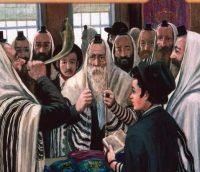
Not to talk of irrelevant matters until after Musaf:[1] One must beware not to talk of irrelevant matters between the Tekios Meyushav [which is the first set of blows that is sounded after Kerias Hatorah] and the Tekios Meumad [which is the second set of blows in Musaf].[2] One […]
12. Preparing on the 1st day of Yom Tov on behalf of the 2nd day of Yom Tov or Shabbos
This article is an excerpt from our Sefer Buy me here or on Amazon.com 12. Preparing on the 1st day of Yom Tov on behalf of the 2nd day of Yom Tov or Shabbos: A. Preparing on 1st day on behalf of 2nd day:[1] It is forbidden to do anything […]

Preparing on the 1st day for the 2nd day of Yom Tov or Shabbos
Preparing on the 1st day of Yom Tov on behalf of the 2nd day of Yom Tov or Shabbos: Preparing on 1st day on behalf of 2nd day in Chutz Laaretz:[1] It is forbidden to do anything on the 1st day of Yom Tov on behalf of the next day, […]
Audio Shiur-The laws of Rosh Hashanah
Bookmark
Audio Shiur-To cry or not to cry-The focus of the Rosh Hashanah prayers
Bookmark
Reciting the 13 attributes of mercy without a Minyan in the Torah reading tune
This article is an excerpt from our Sefer Buy me here or on Amazon.com May one recite the 13 attributes of mercy to himself in the Torah reading tune? If one is saying Selichos without a Minyan, he is to omit the 13 attributes of mercy.[1] It is permitted to recite the thirteen […]
Melting items on Shabbos-Audio Shiur
Begins from 20:00 Bookmark
18. May one eat on Rosh Hashanah prior to hearing Shofar?
This article is an excerpt from our Sefer Buy me here or on Amazon.com May one eat or drink prior to Shacharis or hearing Shofar, on Rosh Hashanah?[1] It is forbidden to eat a meal prior to hearing Shofar.[2] [Thus, since Shofar is blown after Shacharis, therefore even […]
Hataras Nedarim on Erev Rosh Hashana-Q&A
Hataras Nedarim: *For a full digest on the laws and customs of Hataras Nedarim both on Erev Rosh Hashanah and throughout the year, please refer to the “Supplement on Hataras Nedarim” provided in the back of the Sefer. It is customary to perform Hataras Nedarim on Erev Rosh Hashanah.[1] This […]
Sitting for an After Blessing
Sitting during the recital of an after blessing: The general rule Birchas Hamazon:[1] One is required to sit while reciting Birchas Hamazon.[2] He may not stand or lay down.[3] This applies irrelevant of the position in which one ate, whether he was walking in his home when he ate […]
Saying the name of one’s parent
Saying the name of one’s parent:[1] Calling them, or referring to them, by their name:[2] It is forbidden to call one’s parent [father or mother[3]] by their name.[4] This applies whether they are alive, and even after their death. [This applies even not in their presence, and even if they […]
How much money is the Kesuba worth?
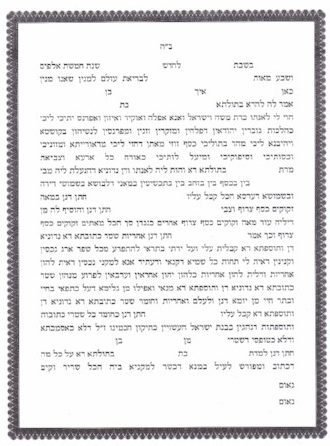
How much money is the Kesuba worth? Introduction: A Kesuba is similar to a loan document or check, which obligates the husband, or his estate, to pay a certain sum of money to his wife. The Kesuba can only be actualized in the event of death of the husband or […]
When should one set up the Blech before Shabbos?
When should one set up the Blech before Shabbos?[1] Biblically, there are no restrictions involved in setting up one’s food on a flame before Shabbos, although the Sages enacted a number of restrictions. First off, they obligated that one may only leave food on a flame if either the flame […]
How much money is the Kesuba worth?
How much money is the Kesuba worth? Introduction: A Kesuba is similar to a loan document or check, which obligates the husband, or his estate, to pay a certain sum of money to his wife. The Kesuba can only be actualized in the event of death of the husband or […]
Compilation 3-On Shabbos, may one place hot food onto a plate that contains food or liquid
On Shabbos, may one place hot food on a plate that contains food or liquid? Whenever one’s plate contains food on it, whether a solid or liquid, and one desires to place on it hot food, the question of Bishul [the prohibition of cooking food on Shabbos] arises. In certain […]
