

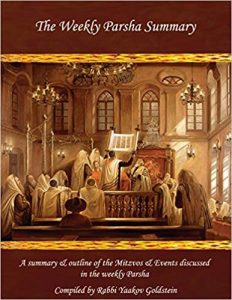
*The article below is an excerpt from the above Sefer
*As an Amazon Associate I earn from qualifying purchases.
 Donate
Shishi (Sheleshi when connected to Metzora)
- Tzaraas on a bald or beardless person:
- One who does not have hair on his head, or one who does not have a beard, is pure. [He is to be judged with the laws of Tzaraas and not Nesakim.] If it grows a reddish, whitish, skin ailment, it is considered Tazraas. The Kohen is to see it and deem him impure.
- The laws of the Metzorah:
- The Metzora must follow the following laws:
- He is to wear torn clothing.
- He is to have long hair and a long mustache.
- He is to announce to others that he is impure.
- He is to sit in seclusion outside of the Jewish camp.
- Tzaraas on clothing:
- When a clothing of wool or linen or leather, or a vessel of leather has Tzaraas that is red or green it is to be shown to the Kohen. The clothing is to be secluded for seven days. On the seventh day the Kohen is to view the item and if the lesion spread the item is to be deemed impure. The garment or vessel is to be burnt.
- If the lesion did not spread on the clothing, then it is to be washed and secluded for a second set of seven days.
Q&A on Rashi
📘 Rashi Q&A — Vayikra 13:40–54
13:40 — Rear Baldness (Kerachat)
Q1. What does “קֵרֵחַ הוּא טָהוֹר הוּא” teach according to Rashi?
A: A person bald at the back of the head cannot contract netek‑defilement, because the area is no longer considered a hair‑growing region.
Q2. Which diagnostic rules apply to such bald areas instead?
A: The rules governing lesions on skin of the flesh, such as:
- white hairs,
- healthy flesh,
- spread of the lesion.
13:41 — Front Baldness (Gabachat)
Q3. What area is called גַּבַּחַת?
A: Hair loss from the front of the head toward the face, including the temples.
Q4. How does this differ from קָרַחַת?
A: קָרַחַת refers to hair loss from the back of the head.
Q5. What colors of lesion are mentioned in a bald area?
A: White with red streaks.
Q6. Why does Scripture mention only this color here?
A: The term נֶגַע teaches that all usual shades of tzara’at apply here as well.
13:43 — Comparing to Skin Tzara’at
Q7. What does “כְּמַרְאֵה צָרַעַת עוֹר בָּשָׂר” mean according to Rashi?
A: The lesion is judged like tzara’at of the skin, not burns, inflammations, or netek.
Q8. How many weeks of quarantine apply here?
A: Two weeks, like regular skin tzara’at.
Q9. Why is this different from netek‑lesions?
A: Netek‑lesions have different color rules and may require only one week of quarantine.
13:44 — Included Among All Metzora’im
Q10. What does “בְּרֹאשׁוֹ נִגְעוֹ” indicate?
A: That bald‑area lesions are fully included in tzara’at laws.
Q11. How do we know this applies to all metzora’im?
A: From the double phrase “טַמֵּא יְטַמְּאֶנּוּ”, which includes all types.
13:45 — Behavior of the Metzora
Q12. What does “פְרֻמִים” mean?
A: His garments must be torn.
Q13. What does “פָרוּעַ” mean?
A: His hair must be let grow long.
Q14. What does “וְעַל־שָׂפָם יַעְטֶה” mean?
A: He covers his face down to the mustache, like a mourner.
Q15. What is “שָׂפָם”?
A: The hair on the lips (mustache).
Q16. Why must he proclaim “טָמֵא טָמֵא”?
A: To warn others to stay away from him.
Q17. What does “בָּדָד יֵשֵׁב” mean?
A: He must dwell completely alone, even apart from other defiled persons.
Q18. Why is the metzora isolated more than others?
A: Because through slander, he caused separation between people; therefore he is separated.
Q19. What is meant by “מִחוּץ לַמַּחֲנֶה”?
A: Outside all three camps of Israel.
13:47–48 — Tzara’at on Garments
Q20. To which materials does garment‑tzara’at apply?
A:
- Wool garments
- Linen garments
- Warp and woof threads
- Unworked leather
- Finished leather goods
Q21. What does “אוֹ בְעוֹר” refer to?
A: Raw leather not yet fashioned into an object.
Q22. What does “אוֹ בְּכָל־מְלֶאכֶת עוֹר” refer to?
A: Leather that has been fashioned into a finished item.
13:49 — Colors of Garment Tzara’at
Q23. What does “יְרַקְרַק” mean?
A: The greenest green.
Q24. What does “אֲדַמְדָּם” mean?
A: The reddest red.
Q25. What does “צָרַעַת מַמְאֶרֶת” mean?
A: A painful, penetrating tzara’at, like a sharp thorn.
Q26. What is the Midrashic meaning of מַמְאֶרֶת?
A: A curse, meaning one may not derive benefit from it.
Q27. Why must the item be burned?
A: Because the lesion is mamméret tzara’at.
Q28. What Midrashic misunderstanding does Rashi reject?
A: That raw wool or flax must also be burned with it.
Q29. What is excluded from burning?
A: Hems (אִמְרִיּוֹת) of a different material.
13:53–54 — Washing and Re‑Quarantine
Q30. What does “אֵת אֲשֶׁר־בּוֹ הַנָּגַע” teach?
A: That the contaminated area together with some surrounding material must be washed.
Q31. Why not wash only the lesion itself?
A: Because Scripture says “that which has the lesion on it”, not just the lesion.
Q32. Why not wash the entire garment?
A: Because Scripture also specifies “the lesion”, limiting the area.
Q33. How is this rule carried out in practice?
A: Part of the garment, including the lesion, is washed.
Related Articles
📜 Daily Chumash & Rashi Bamidbar Shevi’i: The census and services of the Levite family of Kehos
Post Views: 946 *The article below is an excerpt from the above Sefer *As an Amazon Associate I earn from qualifying purchases. Donate Buy in Paperback or Kindle Buy on Apple Books Sign up for Daily Distribution Sponsor an Episode Shevi’i The census and services of the Levite family of
📜 Daily Chumash & Rashi Parshas Bamidbar Shishi: Counting of Bechoros
Post Views: 1,120 *The article below is an excerpt from the above Sefer *As an Amazon Associate I earn from qualifying purchases. Donate Buy in Paperback or Kindle Buy on Apple Books Sign up for Daily Distribution Sponsor an Episode Shishi Counting of Bechoros: The command: Hashem spoke to Moshe
📜 Daily Chumash & Rashi Parshas Bamidbar Chamishi: The Levite census, their jobs, leaders, and area of encampment
Post Views: 1,209 *The article below is an excerpt from the above Sefer *As an Amazon Associate I earn from qualifying purchases. Donate Buy in Paperback or Kindle Buy on Apple Books Purchase on our website Sign up for Daily Distribution Sponsor an Episode Chamishi The Levite census, their jobs,
📜 Daily Chumash & Rashi Parshas Bamidbar Revi’i: The descendants of Aaron
Post Views: 1,313 *The article below is an excerpt from the above Sefer *As an Amazon Associate I earn from qualifying purchases. Donate Buy in Paperback or Kindle Buy on Apple Books Purchase on our website Sign up for Daily Distribution Sponsor an Episode Revi’i The descendants of Aaron: The
📜 Daily Chumash & Rashi Parshas Bamidbar Shelishi: The census of men in the Twelve tribes above age 20
Post Views: 1,437 *The article below is an excerpt from the above Sefer *As an Amazon Associate I earn from qualifying purchases. Donate Buy in Paperback or Kindle Buy on Apple Books Purchase on our website Sign up for Daily Distribution Sponsor an Episode Shelishi Hashem told Moshe that the
📜 Daily Chumash & Rashi Parshas Bamidbar Sheiyni: The census of men in the Twelve tribes above age 20
Post Views: 1,517 *The article below is an excerpt from the above Sefer *As an Amazon Associate I earn from qualifying purchases. Donate Buy in Paperback or Kindle Buy on Apple Books Purchase on our website Sign up for Daily Distribution Sponsor an Episode The census of men in the

Leave A Comment?
You must be logged in to post a comment.