

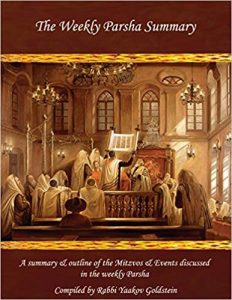
*The article below is an excerpt from the above Sefer
*As an Amazon Associate I earn from qualifying purchases.
 Donate
Shelishi
- The Meil:
- The material: The Meil is to be made entirely from Ticheiles-Turquoise wool.
- Its collar: The Meil is to contain a folded collar and it may not be torn.
- Its bells: Its hem is to be surrounded with pomegranates made of Ticheiles-Turquoise wool, Argamon-Purple wool, and scarlet wool. It is also to contain gold bells all around it. When Aaron walks with it, the bells will make noise, announcing when he enters and exits the Kodesh so that he not die.
- The Tzitz:
- The Tzitz is to be made of pure gold and have engraved on it the words “Kodesh LaHashem.” It shall be placed on a Ticheiles-Turquoise wool string, and on the Mitznefes turban, by its front side. It shall be on Aaron’s forehead and he shall bring appeasement for all the sins involving Karbanos of the Jewish people.
- The Kutoness, Avneit, turban, and pants:
- The material: The Kutones and turbans are to be made of checkered linen for both Aaron and his sons. The Avneit belt is to be made of embroidery.
- The inauguration of the Kohanim: Aaron and his sons are to be inaugurated for the priesthood through dressing them in the above clothing and pouring on them the anointing oil.
- The pants: You shall make linen pants for the Kohanim to cover their private area, from the hips to the thighs.
- The Kohanim are to wear the priestly clothing when they serve in the Mikdash lest they die.
📘 Rashi Q&A — Shemot 28:31–43
28:31 — The Robe (Me’il)
Q1. Why is it called “Me’il Ha’Ephod”?
A: Because the Ephod is worn over it.
Q2. What does “כְּלִיל תְּכֵלֶת” mean?
A: The robe is entirely turquoise wool, with no other material mixed in.
28:32 — The Head Opening
Q3. What does “פִי רֹאשׁוֹ” refer to?
A: The neck opening at the top of the robe.
Q4. What does “בתוכו” mean?
A: Folded inward (as Onkelos: “כפיל לגוויה”).
Q5. How was the hem formed?
A: Woven, not later sewn by needle.
Q6. What is “כְּפִי תַּחְרָא”?
A: Like the hem of a coat of mail, which is folded inward.
Q7. What does “לא יקרע” teach?
A: One who tears the robe transgresses a negative commandment, just as with the Breastplate loosening and the Ark’s poles.
28:33–34 — Pomegranates and Bells
Q8. What were the “rimonim”?
A: Hollow, spherical shapes, like a closed pomegranate or egg.
Q9. What were the “pa’amonei zahav”?
A: Gold bells with clappers inside.
Q10. What does “בתוכם סביב” mean?
A: Bells were attached between every two pomegranates, all around.
Q11. How were they arranged?
A: A bell and a pomegranate, a bell and a pomegranate, alternating.
28:35 — Purpose of the Bells
Q12. What does “ולא ימות” teach?
A: If the Kohen Gadol enters missing this garment (or any required garment), he is liable to death by Heaven, even without performing service.
28:36–38 — The Tzitz (Forehead Plate)
Q13. What was the Tzitz?
A: A gold plate two fingerbreadths wide, spanning ear to ear.
Q14. What phrase was embossed on it?
A: “קֹדֶשׁ לַה’” — “Holy unto Hashem.”
Q15. Why do verses seem contradictory about where the Tzitz sits (on the turban / on the forehead / cords upon it)?
A: Because the cords passed through holes and tied behind the head, with one cord over the turban, so the plate hung properly on the forehead.
Q16. How many cords were used?
A: Six cords — two at each end (inside and outside) and two at the center.
Q17. What does “ונשא אהרן” mean?
A: It implies forgiveness, yet literally means Aaron “bears” the sin until it is removed.
Q18. What sin does the Tzitz atone for?
A: That sacrificial blood or fats were offered in impurity.
Q19. Does the Tzitz atone when not worn?
A:
- One opinion: Yes, it always assures favor.
- Another: Only when worn; “תמיד” teaches he must not let his mind wander from it, touching it to maintain awareness.
28:39 — Tunic, Turban, Sash
Q20. What does “ושִׁבַּצְתָּ” mean?
A: The tunic was made with many recessed patterns.
Q21. What does this tunic consist of?
A: Entirely linen.
28:40 — Garments for Aaron’s Sons
Q22. What garments were made for Aaron’s sons?
A: Four garments only: tunic, sash, hat, and trousers.
Q23. What are “migba’ot”?
A: Hats — the same as the Kohen Gadol’s mitznefet.
28:41 — Dressing, Anointing, Inaugurating
Q24. Which garments were for Aaron himself?
A: Breastplate, Ephod, Robe, Checkered Tunic, Turban, Sash, Tzitz, and trousers.
Q25. Which garments were for his sons?
A: Those explicitly listed for them.
Q26. What does “ומשחת אותם” mean?
A: To anoint them with the anointing oil.
Q27. What does “ומילאת ידם” mean?
A: Inaugurate them — “filling the hands” means installation into office.
Q28. What example does Rashi give from Old French?
A: A gant (glove) given to confer an appointment — “revestir.”
28:42 — Linen Trousers
Q29. Who were the trousers for?
A: Aaron and his sons.
Q30. How many garments does this make?
A: Eight for the Kohen Gadol; four for a regular Kohen.
28:43 — Requirement to Wear the Garments
Q31. When must the garments be worn?
A: Whenever entering the Tent of Meeting or approaching the Outer Altar.
Q32. What is the penalty for serving without the proper garments?
A: Death by Heaven.
Q33. What does “חֻקַּת עוֹלָם” teach?
A: This law applies immediately, eternally, and is essential, not optional.
Related Articles
📜Daily Chumash & Rashi Parshas Tzav – Shishi: The second inauguration ram (Friday 9th Nissan)
Post Views: 1,009 *The article below is an excerpt from the above Sefer *As an Amazon Associate I earn from qualifying purchases. Donate Buy in Paperback or Kindle Buy on Apple Books Purchase on our website Sign up for Daily Distribution Sponsor an Episode Shishi The second inauguration ram: Aaron
📜Daily Chumash & Rashi Parshas Tzav – Chamishi: Offering the Karbanos by the inauguration (Thursday 8th Nissan)
Post Views: 1,485 *The article below is an excerpt from the above Sefer *As an Amazon Associate I earn from qualifying purchases. Donate Buy in Paperback or Kindle Buy on Apple Books Purchase on our website Sign up for Daily Distribution Sponsor an Episode Chamishi Offering the Karbanos by the
📜Daily Chumash & Rashi Parshas Tzav – Revi: The inauguration of Aaron and his sons (Wednesday 7th Nissan)
Post Views: 1,332 *The article below is an excerpt from the above Sefer *As an Amazon Associate I earn from qualifying purchases. Donate Buy in Paperback or Kindle Buy on Apple Books Purchase on our website Sign up for Daily Distribution Sponsor an Episode Revi’i The inauguration of Aaron and
📜Daily Chumash & Rashi Parshas Tzav – Shelishi: The Karban Shelamim (Tuesday, 6th Nissan)
Post Views: 1,424 *The article below is an excerpt from the above Sefer *As an Amazon Associate I earn from qualifying purchases. Donate Buy in Paperback, Kindle, or Audible Buy on Apple Books Purchase on our website Sign up for Daily Distribution Sponsor an Episode The laws of the Shlamim,
📜 Daily Chumash & Rashi Parshas Tzav – Sheiyni: The Karban Chatas and Asham (Monday 5th Nissan)
Post Views: 1,524 *The article below is an excerpt from the above Sefer *As an Amazon Associate I earn from qualifying purchases. Donate Buy in Paperback or Kindle Buy on Apple Books Purchase on our website Sign up for Daily Distribution Sponsor an Episode Sheiyni The Karban of the Kohanim
📜Daily Chumash & Rashi Parshas Tzav – Rishon: Terumas Hadeshen and the Mincha offering (Sunday 4th nissan)
Post Views: 1,547 *The article below is an excerpt from the above Sefer *As an Amazon Associate I earn from qualifying purchases. Donate Buy in Paperback or Kindle Buy on Apple Books Purchase on our website Sign up for Daily Distribution Sponsor an Episode Parshas Tzav Pesukim: 97 [Siman:

Leave A Comment?
You must be logged in to post a comment.