Table of Contents
📅 Today in Jewish History
📅 The Sixth Day of Creation and the Formation of Adam Harishon According to Rebbe Yehoshua (Year 0)
The Talmud records a classic dispute (Rosh Hashanah 10–11) about when the world was created: Rabbi Eliezer holds that creation took place in Tishrei, with the first day on 25 Elul and the creation of Adam on 1 Tishrei, which underlies the Jewish tradition of Rosh Hashanah as the anniversary of Creation and the Day of Judgment, while Rabbi Yehoshua holds that creation took place in Nisan, with Adam created on 1 Nisan and the first day of Creation occurring several days earlier on the 25th of Adar. Chassidus explains that these views are not contradictory: Tishrei marks the conception and divine planning of creation, while Nissan represents the actual revelation and activation of the created world—the moment when creation came into visible expression. Thus, Nissan is seen as the beginning of creation as it is lived and revealed, while Tishrei is its hidden, primordial root.
📅 The End of the Flood and the First of Nissan (Year 1658 – 2104 BCE)
Scripture states, “The waters dried from upon the earth, and Noach removed the covering of the ark” (Genesis 8:13). According to Rabbi Yehoshua, this occurred on the first of Nissan, which he identifies as the beginning of the cycle of creation (Rosh Hashanah 11a). By contrast, Rabbi Eliezer maintains that creation began on the first of Tishrei, and accordingly places the end of the Flood within that framework. The Sages explain that these views reflect two dimensions of creation: Tishrei represents the hidden conception and judgment of the world, while Nissan marks renewal, revelation, and visible rebirth—fittingly the moment when the world emerged renewed after the Flood.
📅 The Birth (and Passing) of Yitzchak Avinu – Year 2048 (1713 BCE)
According to one tradition, this day is identified as the day on which Yitzchak Avinu was born. However, Tosafot (Rosh Hashanah 11a) state that Yitzchak was born on the fifteenth of Nissan, the first day of Pesach. It is further suggested that he may also have passed away on that same date, in keeping with the principle that the Holy One, blessed be He, completes the years of the righteous from day to day and from month to month (Rosh Hashanah 11a; Kiddushin 38a).
📅 Inauguration of Mishkan – The Ten Crowns of Rosh Chodesh Nissan: 1 Nissan, Year 2449 (1312 BCE)
The Talmud[1] states that the day of Rosh Chodesh Nissan in the year that the Mishkan was established merited to receive ten crowns [i.e. monumental occurrences]:
- First day of creation [which was on Sunday, and in that year Rosh Chodesh Nissan fell on Sunday].
- First day that the Nesi’im brought their Karbanos.
- First day of priesthood.
- First day of Karbanos.
- First day of the fire coming onto the altar.
- First day of eating the Karbanos within the Mishkan.
- First day of the residing of the Shechina
- First day of Birchas Kohanim.
- First day of the Bamos prohibition.
- First month.
📅 Nadav and Avihu — The Passing of the Two Sons of Aharon[2]
Nadav and Avihu, the elder sons of Aharon HaKohen, served as priests at the inauguration of the Mishkan. On the eighth day of the Milu’im, they brought an “alien fire” not commanded by God, and were consumed by a divine fire (Leviticus 10). Chazal present multiple explanations for their sin, emphasizing their exceptionally high spiritual stature and the principle that God is exacting with the righteous.
📅 The Inauguration of the Second Temple – Year 516 BCE (3408)
On this day, the Second Beit HaMikdash was inaugurated, as recorded in Ezra 6:15. In the days of Ezra, inaugural offerings (milu’im) were brought, following the model of the dedication in the days of Moshe Rabbeinu. This accords with the prophecy of Yechezkel (Ezekiel 45:18–25), which describes the purification of the Temple beginning on the first day of the first month, with additional offerings on the seventh day to atone for inadvertent wrongdoing and thereby sanctify the House.
📅 Ezra’s Ascent from Babylon and the Return to Jerusalem – Year 458 BCE (3303)
On this day, Ezra and his company began their journey from Babylon and arrived in Jerusalem on the 1st of Av (Ezra 7:9). Following their arrival, Ezra undertook to strengthen the spiritual foundations of the community, including appointing judges to investigate and resolve the matter of foreign marriages (Ezra 10:16–17).
📅 Yom Korban Etzim — The Wood Offering of Beit Arach ben Yehuda
Today is also the Yom Korban Etzim for the family of Beit Arach ben Yehuda, one of the families designated to bring wood for the Altar, as listed in the Mishnah (Ta’anit 4:5). On this day, their offering ensured a continuous supply of wood for the service of the Beit HaMikdash, and the day was observed as one of honor and joy for that family.
📅 Megillat Ta’anit: No Fasting from 1–8 Nissan — Second Temple Era
According to Megillat Ta’anit, chapter 1, the days from the first through the eighth of Nissan were established during the Second Temple period as days on which fasting is forbidden. These days commemorate the defeat of the Sadducees (Tzedukim) in their claim that the daily Tamid offering could be brought from private funds. The Sages ruled that all communal offerings must be purchased from terumat ha‑lishkah, the communal Temple treasury, as derived from the verse “Command the Children of Israel: My offering, My food…”. When the Sages’ ruling prevailed, the victory was fixed as a period of joy, and therefore fasting was prohibited on these days.
[1] Shabbos 87b
[2] Rama 573:1; Michaber 580:1-2; Admur 288:3
📅 Today’s Yahrzeits
🕯️ Nadav and Avihu — The Two Sons of Aharon
🕯️ Ovadiah Hanavi — Prophet in Trei Asar
🕯️ Rebbe Dosa — Tana
🕯️ Rabbi Yeshayahu Basan — Author of Lachmei Todah
🕯️ Rabbi Shmuel Kellin — Author of Machatzis Hashekel
👤Their Background[1]
🕯️ Ovadiah HaNavi — Prophet in Trei Asar
Ovadiah the Prophet is the author of the shortest book in Tanach and one of the Twelve Minor Prophets (Trei Asar). His prophecy focuses on the downfall of Edom for its cruelty and indifference during Israel’s suffering. According to Chazal, Ovadiah was the same righteous court official who hid the prophets in the days of King Ahab, making him uniquely suited to prophesy against Edom.
🕯️ Rabbi Dosa (ben Harkinas) — Tanna
Rabbi Dosa ben Harkinas was a leading Tanna of the first generation, a contemporary of Rabban Yochanan ben Zakkai, who lived from the late Second Temple period into the era of Yavneh. Known for his humility, longevity, and authority in halachic matters, he is cited frequently in the Mishnah. One of his most famous teachings appears in Pirkei Avot concerning habits that remove a person from the world.
🕯️ Rabbi Yeshayahu Basan — Author of Lachmei Todah
Rabbi Yeshayahu Basan (c. 1673–1739) was a foremost Italian halachic authority and kabbalist, best known as the author of the responsa work Lachmei Todah. He served as rabbi of Padua and later Reggio Emilia, and was the primary teacher and defender of Rabbi Moshe Chaim Luzzatto (Ramchal). His writings reflect both rigorous halachic analysis and deep spiritual insight.
🕯️ Rabbi Shmuel Kellin — Author of Machatzis HaShekel
Rabbi Shmuel HaLevi Kellin (1724–1806) was a leading Ashkenazic posek and rosh yeshivah in Bohemia. He is renowned for his monumental commentary Machatzis HaShekel on the Magen Avraham and other halachic works, which became a foundational tool for later decisors. Known for his piety, asceticism, and devotion to communal welfare, he passed away on Rosh Chodesh Nissan.
[1] Please not that these historical notes were prepared with the assistance of Copilot Pro, an AI Research Agent, and have not been independently verified.
Today in Halacha
Ta’anit Tzadikim — Due to the Passing of Nadav and Avihu[1]
This day became known as one of the days of Ta’anit Tzadikim because Nadav and Avihu, the sons of Aharon HaKohen, passed away on Rosh Chodesh Nissan. For this reason, although fasting is generally prohibited in Nissan, it is permitted for a Chasan to fast on Rosh Chodesh Nissan, as some maintain that one should always fast on this date in remembrance of their passing.
🌸 Customs of Chodesh Nissan – Quick Guide 🌸
🚫 No Tachanun all month
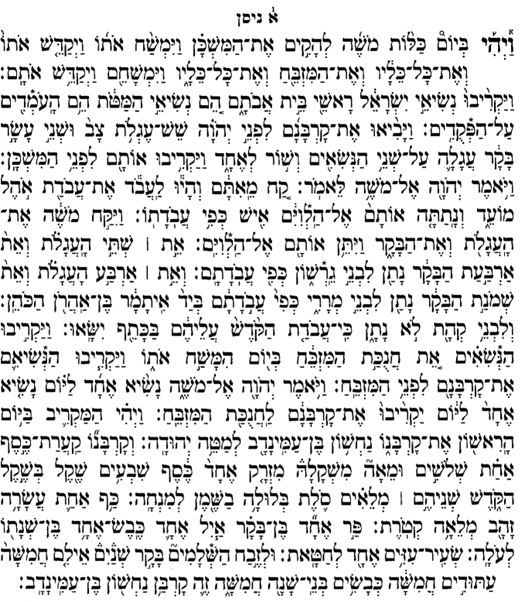
📜 Nesi’im Reading (Rosh Chodesh → 13 Nissan)
• Read daily after davening
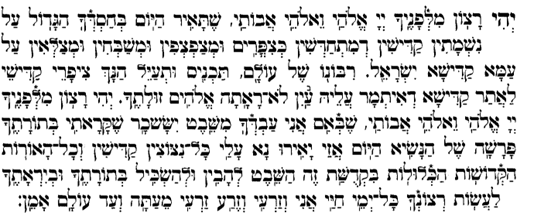
• Say Yehi Ratzon after each day
• Day 1: Vayehi Biyom Kalos Moshe
✨ Spirit of Nissan
• Month of miracles & redemption
• Every day like Rosh Chodesh
• Geulah & Techiyas HaMeisim will be in Nissan
[1] Rama 573:1; Michaber 580:1-2; Admur 288:3
Todays Nassi
Rosh Chodesh Laws
- Work/Sewing/Laundry: Women refrain from work on Rosh Chodesh. Avoid sewing and laundry
- Cutting nails, hair: Do not cut the hair [of the head] or nails on Rosh Chodesh. If Rosh Chodesh falls on Erev Shabbos one who cuts his nails every Erev Shabbos may do so now as well.
- Eat a festive meal: One is to have a festive meal on the day [not night] of Rosh Chodesh. It is best to wash on bread for this meal. One is to eat or drink something before midday of Rosh Chodesh.
- Increase in charity.
- Avoid visiting a cemetery.
- Learning Tehillim: Learn a verse from the chapter of Tehillim that corresponds to your age with the commentary of Rashi. Arrange to learn a certain amount of verses each Rosh Chodesh so by the concluding year of age one will have learned all of his verses on Rosh Chodesh with the commentary of Rashi.
- Hold a Chassidic gathering.
- Tachanun is omitted on Rosh Chodesh.
- A mourner does not Daven for the Amud
- Yaleh Veyavo in Davening: Recite Yaaleh Veyavo in Maariv, Shacharis and Mincha. We do not announce Yaaleh Veyavo prior to Maariv or Shacharis. If one forgot to recite it by Maariv, Shemoneh Esrei is not required to be repeated, although one may do so as a Toras Nedava. By Shacharis and Mincha Shemoneh Esrei must be repeated. By Shacharis, if one only remembered that he forgot Yaaleh Veyavo after Davening Musaf, he is not to repeat Shemoneh Esrei. If one is in doubt whether he said Yaaleh Veyavo by Shacharis or Mincha, one is to complete the Shemoneh Esrei and repeat Shemoneh Esrei again as a Nidava.
- Hallel: Recite a blessing before and after Hallel even if Davening in private. When Davening with a Minyan many are accustomed to say the blessing to themselves together with the Chazan, or directly before or afterwards. Hallel may be recited anytime throughout the day, until Tzeis Hakochavim. Nevertheless, place effort to Daven on pace with the Minyan so one can recite Hallel with the congregation. Stand throughout the recital of Hallel. Recite the verse of Avraham Zakein three times at the conclusion of Hallel.
- Recite Kaddish Tiskabel after Hallel.
- Recite Shir Shel Yom, Hoshieinu and Barchi Nafshi. Beis Yaakov and Tehila Ledavid are omitted.
- Torah reading: Read four Aliyos from the Torah after Barchi Nafshi.
- Recite Ashreiy and Uva Letziyon. Omit Lamnatzeiach. The Chazan does not conclude aloud the end of Uva Letziyon. Return the Torah to the Ark after Uva Letziyon.
- Musaf: Wear Rabbeinu Tam before Musaf. Remove all Tefillin before Kaddish of Musaf. The Chazan is to recite a Psalm before Kaddish of Musaf. One recites Keser in Kedusha.
- Recite Lamnatzeiach in Tehillim after Davening.
- Yaaleh Veyavo in Bentching: Recite Yaleh Veyavo in Bentching. If began eating before Rosh Chodesh and is Bentching on Rosh Chodesh, then if ate Kezayis at night, recite Yaaleh Veyavo. If began eating on Rosh Chodesh and is Bentching at night after Rosh Chodesh, recite Yaaleh Veyavo unless already Davened Maariv.
- Don’t repeat Bentching if forgot Yaaleh Veyavo. If remember before beginning “Baruch ..Hatov Vihameitiv” recite the blessing of Baruch Ata Hashem Elokeinu Melech Haolam Shenasan Roshei Chodoshim Leamo Yisrael Lezikaron”.
- Migdol: Recite Migdol instead of Magdil in the Harachaman’s.