Table of Contents
📅 Today in Jewish History
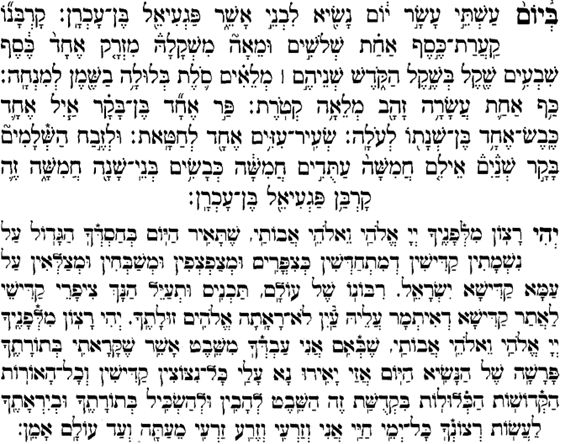
📅 Yehoshua circumcises the Jewish people
Year 2489 — “And this is the matter of the circumcision that Yehoshua performed” (Joshua 5). After entering the Land, Yehoshua circumcised all those who had not been circumcised in the wilderness, at a place called Giv’at HaArelot, completing the covenantal preparation of Israel for settlement in the Land.
📅 Today’s Yahrzeits
🕯️ Rabbeinu Moshe ben Nachman (the Ramban) of Girona — Torah giant, author of Iggeret HaRamban, buried in Hebron
🕯️ Rabbi Yeshayah ben Rabbi Avraham HaLevi Horowitz (the Shlah HaKadosh) — author of Shnei Luchot HaBrit, buried in Tiberias
🕯️ Rabbi David Hirsch ben Rabbi Naftali Frankel of Berlin — author of Korban HaEdah on the Talmud Yerushalmi
🕯️ Rabbi Shlomo Zalman ben Rabbi Yitzchak Lipschitz of Warsaw — Av Beit Din of Warsaw, author of Chemdat Shlomo
🕯️ Rabbi Betzalel ben Rabbi Yisrael Moshe HaKohen of Vilna — author of Reishit Bikkurim and Mar’eh Kohen
👤Their Background[1]
🕯️ 11 Nissan 5030 (1270) — Passing of Rabbeinu Moshe ben Nachman (the Ramban) of Girona, of blessed memory
The Ramban was among the greatest Torah giants of all generations—unique in his mastery of Talmud, halachah, Kabbalah, and fear of Heaven. The Rashba testified that “we have none greater than him in wisdom, stature, and yirat chet.” On this day it is fitting to study the famous Iggeret HaRamban, his ethical letter emphasizing humility, restraint, and constant awareness of Hashem. He is buried in Hebron.
🕯️ 11 Nissan 5390 (1630) — Passing of the holy Rabbi Yeshayah ben Rabbi Avraham HaLevi Horowitz, author of Shnei Luchot HaBrit (the Shlah HaKadosh), of blessed memory
The Shlah HaKadosh was a towering figure who unified halachah, Kabbalah, and ethical refinement. He emphasized sanctifying everyday life and educating future generations in holiness. He is buried in Tiberias. One who ascends to his grave does well also to visit Safed to pray at the resting places of Rabbi Yosef Karo (the Beit Yosef) and the Maharal of Safed, though it should be noted that the custom of Safed is not to visit cemeteries during the month of Nissan.
🕯️ Rabbi David Hirsch ben Rabbi Naftali Frankel of Berlin (c. 1704–1762; yahrzeit: 11 Nissan) — author of Korban HaEdah
Rabbi David Hirsch Frankel was one of the foremost 18th‑century Ashkenazic Torah scholars and served as Chief Rabbi of Berlin beginning in 1742. He was among the very first great sages to devote sustained scholarly attention to the Jerusalem Talmud (Talmud Yerushalmi), which had been largely neglected in earlier generations. His monumental commentary Korban HaEdah, written in a Rashi‑like style, became one of the two classic commentaries printed alongside the Yerushalmi, and remains indispensable for its study.
In addition to Korban HaEdah, he authored Shirei Korban, Tosafist‑style glosses that resolve textual and conceptual difficulties, and he also promoted the study of Maimonides, overseeing new printings of the Mishneh Torah. Rabbi Frankel was renowned not only for his scholarship but also for his influence as a teacher; among those shaped by him was Moses Mendelssohn, whom he introduced to Moreh Nevuchim. His legacy established the Yerushalmi as a central pillar of Torah study and secured his place among the great poskim and mefarshim of Ashkenazic Jewry.
🕯️ Rabbi Shlomo Zalman ben Rabbi Yitzchak Lipschitz of Warsaw (d. 5597 / 1837) — Av Beit Din of Warsaw, author of Chemdat Shlomo
Rabbi Shlomo Zalman Lipschitz was one of the foremost halachic authorities of Poland in the late 18th and early 19th centuries. Serving as Av Beit Din of Warsaw, he was renowned for his sharp analytical mind and clarity in psak. His responsa, collected in Chemdat Shlomo, are widely cited by later poskim and address complex issues in Jewish law with depth and precision. He played a central role in shaping halachic discourse in his generation, especially in matters of communal and civil law.
🕯️ Rabbi Betzalel ben Rabbi Yisrael Moshe HaKohen of Vilna (d. 5638 / 1878) — author of Reishit Bikkurim and Mar’eh Kohen
Rabbi Betzalel HaKohen was a respected Lithuanian Torah scholar associated with Vilna, the great center of Torah learning. He authored Reishit Bikkurim and Mar’eh Kohen, works reflecting his breadth in halachah and Torah commentary, particularly in matters related to priestly laws and ritual sanctity. Living in the intellectual orbit shaped by the legacy of the Vilna Gaon, he exemplified the Lithuanian tradition of rigorous learning combined with fear of Heaven.
[1] Please not that these historical notes were prepared with the assistance of Copilot Pro, an AI Research Agent, and have not been independently verified.
📅 Today in Chabad History
📅 Nissan 5610 (1850) — Wedding of the Rebbe Maharash (Rabbi Shmuel Schneersohn)
In the year 5610, the Rebbe Maharash married Rebbetzin Rivka, his first cousin. She was the daughter of Rabbi Yosef Yitzchak Schneersohn, son of the Tzemach Tzedek, and her mother Rebbetzin Sara was the daughter of the Mitteler Rebbe (Rabbi Dovber of Lubavitch). At the time of their marriage, the Rebbe Maharash was sixteen years old, and Rebbetzin Rivka was fifteen. Their wedding marked the union of two central branches of the Chabad dynasty and laid the foundation for the next generation of Chabad leadership.
📅 11 Nissan 5662 (1902) — Birth of the Rebbe, of blessed memory
On Erev Shabbos Hagadol, 11 Nissan 5662, the Rebbe was born in the city of Nikolayev, Ukraine, and was named Menachem Mendel after his great‑grandfather, Rabbi Menachem Mendel Schneersohn, the Tzemach Tzedek.
On the second night of Pesach of the year 1939, it was later related by the Rebbe Rayatz that there had been a great and severe decree in the heavenly realms against the Jewish people, decreed earlier that year, and that shortly before Pesach it was miraculously annulled. This was seen as a sign of divine mercy associated with the birth of a great soul.
Rebbetzin Chana, the Rebbe’s mother, said of him: “I can testify about him that he was holy from birth (kadosh mirechem).”
On the day of the Rebbe’s birth, the Rebbe Rashab sent six telegrams to the child’s father, Rabbi Levi Yitzchak Schneerson, containing blessings, directives, and guidance relating to the newborn. Among the instructions were to prepare a tallit katan, a yarmulke, and to ensure the child’s hands were washed with negel vasser.
📅 1915 — Bar Mitzvah of the Rebbe (Age 13)
At the Rebbe’s bar mitzvah, his father, Rabbi Levi Yitzchak Schneerson, delivered a profound discourse that left a deep impression on all who heard it. During the event, the young Rebbe began crying intensely, and many of the guests, moved by the moment, joined him in tears. By the time he reached bar mitzvah age, the Rebbe was already reviewing complex Torah subjects, reflecting extraordinary spiritual and intellectual maturity.
📅 1943 — Publication of HaYom Yom
On 11 Nissan 5703 (1943), the foundational Chabad work HaYom Yom was published. This concise daily guide combines Chassidic teachings, customs, and avodah, and became a cornerstone of Chabad life worldwide.
📅 1949 — Hidden Farbrengen with the Rebbe Rayatz
In 1949, on the Rebbe’s birthday, the Rebbe Rayatz conducted a hidden farbrengen together with the Rebbe. Matters were discussed that were not public, and were transmitted only among the Rabbeim, reflecting the inner nature of the occasion.
📅 1962 — The Rebbe’s 60th Birthday
In 1962, when the Rebbe turned 60, a special public farbrengen was held — the first public birthday farbrengen of its kind. On this day, the Rebbe also established Kollel Rachamim, the first kollel designated for English‑speaking students, marking a major expansion of Torah study beyond traditional language barriers.
📅 1971 — The Rebbe’s 70th Birthday
In 1971, for the Rebbe’s 70th birthday, a milestone was reached:
From this year onward, a farbrengen began to be held every Yud‑Alef Nissan, establishing a lasting annual tradition.
📅 1972 — Call for 71 New Chabad Institutions
At the conclusion of the Rebbe’s 70th year, it was announced that by the next 11 Nissan, 71 new Chabad institutions should be established worldwide — one corresponding to each year completed — greatly accelerating global Chabad expansion.
📅 1981 — Sefer Torah for Jewish Children
In 1981, the Rebbe announced the Mitzvah of a Sefer Torah for Jewish children, calling to unite all Jewish boys and girls below bar/bat mitzvah age in one Sefer Torah written especially for them, emphasizing Jewish unity and spiritual protection for children.
📅 1982 — Special Tanya Printing & Dollar for Tzedakah (Age 80)
In 1982, during the Rebbe’s 80th year, a special edition of the Tanya was printed and distributed. Along with it, the Rebbe gave one dollar for tzedakah to each participant — a powerful combination of Torah and charity.
📅 1984 — Second Special Tanya Distribution
In 1984, the Rebbe again requested a special Tanya printing, which was distributed at the conclusion of the birthday farbrengen, reinforcing the central role of Tanya in Chabad life.
📅 1985 — Final Public Birthday Farbrengen (Age 83)
The year 1985 marked the last public birthday farbrengen of the Rebbe, on his 83rd birthday.
📅 1986 — Beginning of Sunday Dollar Distribution
In 1986, the Rebbe began the custom of distributing dollars every Sunday, usually after Shacharit and continuing until Minchah. This practice continued every single Sunday, emphasizing personal blessing and tzedakah.
📅 1989 — Distribution of Kuntres with Dollar
In 1989, the Rebbe distributed a special kuntres (pamphlet) together with a dollar for tzedakah to everyone above bar/bat mitzvah age.
📅 1990 — Publication of the Maamar Keisha Fashim
In 1990, the maamar Keisha Fashim was published and distributed on 11 Nissan, and the Rebbe again gave a dollar for tzedakah, uniting Chassidic teaching with action.
Todays Nassi