Table of Contents
📅 Today in Jewish History
📅 Year 2048 — Bris Milah of Avraham Avinu
“Before a year had passed, Avraham Avinu was circumcised”
It is taught that on the very day of Avraham Avinu’s brit milah, the angels came to visit him, and that day was Pesach. This establishes a deep connection between brit milah and Pesach, redemption and covenant.
📅 Year 2208 — The Episode of Dinah and Shechem
The departure of Dinah, daughter of Yaakov and Leah, to see the daughters of the land, and her abduction by Shechem son of Chamor.
📅 Year 3214 — Chizkiyahu HaMelech, fell gravely ill
Three days before the downfall of Sancheriv, Chizkiyahu became deathly ill, and Yeshayahu HaNavi came to visit him. Chizkiyahu turned his face to the wall and prayed, as described in Berachot 10a, and his prayer was accepted. Hashem added fifteen years to his life, and as a sign, caused the shadow on the steps of Achaz to move backward ten degrees. This miracle occurred on the day of Achaz’s death (Sanhedrin 96b). After recovering, Chizkiyahu composed a written song of thanksgiving to Hashem, which is recorded in Yeshayahu chapter 38, expressing gratitude for life restored and for divine salvation.
📅 Year 3405 — The Decree of Haman is Written
“The king’s scribes were summoned in the first month, on the thirteenth day of it, and it was written according to all that Haman commanded … and the city of Shushan was perplexed.” (Esther 3:12–15)
On 13 Nissan, Haman persuaded Achashverosh to summon the royal scribes and record a decree of annihilation against the Jews, casting the city of Shushan into utter confusion, even as the king and Haman sat to drink; Mordechai, grasping the spiritual danger beneath the political plot, tore his garments and cried out bitterly, awakening the people to teshuvah rather than despair; through Hatach he charged Esther not to imagine herself safe in the palace, for her rise was “for such a time as this,” prompting her to abandon fear and call for three days of fasting, prayer, and unity; this turning inward overturned the counsel of the wicked—“take counsel and it shall be annulled”—and transformed hidden threat into revealed salvation, so that the decree born in arrogance was undone by humility, faith, and mesirat nefesh, culminating in light, joy, and honor for Israel.
📅 Today’s Yahrzeits
🕯️ Hasach, which is Daniel, is Killed by Haman
🕯️ Rabbi Yosef Karo – The Michaber and Beis Yosef– Author of the Shulchan Aruch
🕯️ Rabbi Moshe Alshich the Alshich HaKadosh – Author of Toras Moshe
🕯️ Rabbi Chaim Ben Rav Shbas Maharchash – Author of Toras Chaim
🕯️ Rabbi Menachem Mendel Schneerson of Lubavitch (the Tzemach Tzedek)
🕯️ Rabbi Yoel Moskovitz of Shatz (Shotz)
👤Their Background[1]
🕯️ Hasach — Identified as Daniel, Killed by Haman
Chazal identify Hatach, the trusted intermediary between Esther and Mordechai, with Daniel the prophet (Megillah 15a), explaining that he was called Hatach either because he had been “cut down” from his former greatness at court, or because all matters of state were “decided” through him; Midrashic tradition further records that Haman noticed Hatach repeatedly going back and forth between Esther and Mordechai and had him killed (Pirkei d’Rabbi Eliezer 50; Targum Sheni to Esther), which resolves the textual anomaly in the Megillah where Hatach suddenly disappears and thereafter the verse states, “and they told Mordechai Esther’s words” in the plural (Esther 4:12); according to this tradition, Daniel gave his life in the opening stage of the Purim drama, silenced by Haman because he served as the last prophetic‑level figure bridging palace and street, Esther and Mordechai.
🕯️ Maran Rabbeinu Yosef ben Ephraim Karo (the Beit Yosef / Mechaber)
Yahrzeit: 13 Nissan 5335 (1575), Safed
Rabbi Yosef Karo stands as the greatest halachic codifier of the post‑Talmudic era and one of the most influential sages in Jewish history. Born in Spain and exiled as a child during the 1492 expulsion, he carried the trauma and responsibility of exile throughout his life, which deeply shaped his Torah mission: to unify the Jewish people through halachah.
His monumental work, Beit Yosef, is a comprehensive commentary on the Arba’ah Turim, in which he systematically gathered, analyzed, and weighed the rulings of all major Rishonim. From this he distilled the Shulchan Aruch, written in concise, decisive language, intended to be a practical guide for every Jew. Together with the glosses of the Rema, it became the universally accepted Code of Jewish Law.
In addition to halachah, Maran was a profound kabbalist. His mystical diary, Maggid Meisharim, records teachings he received from a heavenly mentor (the “Maggid”), urging him toward asceticism, holiness, and Torah perfection. He also authored Kesef Mishneh, defending and clarifying the Rambam’s Mishneh Torah, and responsa Avkat Rochel, which reflect his leadership of world Jewry from Safed.
Maran served as head of the Safed beit din during its golden age and was central to the attempt to renew semikhah (classical rabbinic ordination). His influence extended far beyond his lifetime; to this day, virtually all halachic discourse begins with the Shulchan Aruch.
There are those among the people of Safed who do not go out to graves even on yahrzeits during the month of Nissan, in accordance with what is brought in Yesod Yosef, that one does not go to the cemetery in Nissan. Instead, they pray and learn from the sefarim of the tzaddikim in their batei midrash within the Old City.
🕯️ Rabbi Moshe ben Rabbi Chaim Alshich (the Alshich HaKadosh)
Yahrzeit: 13th Nissan, Safed (1593)
The Alshich HaKadosh was one of the towering figures of Safed’s 16th‑century renaissance and among the very few sages in history honored with the title “HaKadosh.” A close disciple of Maran Yosef Karo, he was ordained by him and later served as a judge on the Safed beit din.
The Alshich was famed primarily as a darshan of unmatched power. His Shabbat sermons drew vast crowds, and from these discourses emerged his classic Torah commentary Torat Moshe, which blends peshat, derash, ethics, and subtle kabbalistic insight. His style speaks directly to the soul, emphasizing moral responsibility, divine providence, and teshuvah.
He was also a teacher of Rabbi Chaim Vital, the great transmitter of the Arizal’s teachings, and occupied a unique position bridging halachah, derash, and Kabbalah. Although personally steeped in mystical wisdom, his writings are notable for their restraint, focusing on clarity and ethical elevation rather than esoteric symbolism.
As you note, there is confusion in the sources regarding his exact yahrzeit, likely due to his passing during Chol HaMoed Pesach and the Safed custom of limiting cemetery visits in Nissan. This led to divergent commemorative practices, some aligning his remembrance with Maran the Beit Yosef, others observing it separately.
🕯️ Rabbi Chaim ben Rabbi Shabtai of Salonika (the Maharchash) — Author of Toras Chaim
Rabbi Chaim ben Rabbi Shabtai (known by the acronym Maharchash) was among the greatest halachic authorities of Ottoman Jewry in the late 16th and early 17th centuries, serving for decades as Rosh Yeshiva and chief rabbinic figure of Salonika, one of the most important Torah centers of the post‑Spanish‑expulsion world. A disciple of leading sages including Rabbi Aharon Sasson, Rabbi Shmuel de Medina (Maharshdam), and Rabbi Shlomo HaKohen (Maharshakh), he became renowned for his penetrating halachic analysis, pastoral leadership, and ability to adjudicate complex communal disputes across the Jewish world. His monumental responsa collection Toras Chaim—particularly influential in Even HaEzer and Choshen Mishpat—was consulted by the foremost poskim of Safed, Venice, Rhodes, and beyond, and contemporaries described him as one whose “net was spread over all the communities of the Diaspora.” He led the great yeshiva of Salonika for nearly forty years, educating hundreds of students who later served as rabbis throughout the Balkans and Ottoman lands, and ultimately became chief rabbi of Salonika itself. Rabbi Chaim passed away on 13 Nissan 5407 (1647), leaving behind a halachic legacy marked by clarity, responsibility, and a deep concern for the unity and moral health of Jewish communal life.
🕯️ Rabbi Menachem Mendel ben Shalom Shachna of Lubavitch (the Tzemach Tzedek)
Yahrzeit: 13 Nissan 5626 (1866)
The Tzemach Tzedek, third Rebbe of Chabad‑Lubavitch and grandson of the Alter Rebbe, was one of the greatest Torah giants of the 19th century. His leadership spanned a turbulent era of Russian oppression, forced conscription, and governmental interference in Jewish life. He was a formidable halachic authority, authoring thousands of responsa across all areas of Torah law, displaying encyclopedic mastery of Shas, Rishonim, and Acharonim. Simultaneously, he was a profound Chassidic thinker, delivering deep maamarim that expanded and systematized Chabad philosophy. The Tzemach Tzedek was also a fearless communal defender, confronting the Russian authorities to protect Jewish education, religious observance, and communal autonomy. He endured arrests and persecution, viewing them as part of his responsibility as a Rebbe.
He passed away at the age of seventy‑six and a half, on a Wednesday night at approximately 12:30 after midnight, and was buried shortly thereafter. It was later related that in his final hours he spoke about Maran the Beit Yosef, noting that the Beit Yosef had passed away on this same calendar day, and hinted that this was alluded to in the ambiguous wording of the Megillah, “Vayikare’u sofrei ha‑melech… ba‑chodesh ha‑rishon b’sheloshah asar yom bo”—that on this very day the king’s scribes were summoned—understood homiletically as a reference to the Beis Yosef and Rebbe Maharash. With his passing, the leadership of the Maharash began, and the Maharash said explicitly to those present, “You should know that my father is not dead; whoever wishes to ask a request may ask,” adding that he himself asked his father a request. R’ Yishmael Levitin related in the name of his father that at the time of the passing, the Maharil said that there never was such a Rebbe, that one single line of his was enough to generate an entire maamar.
🕯️ Rabbi Yoel Moskovitz of Shatz (Shotz)
Founder of the Shotz Chassidic dynasty (Bukovina, Romania — 19th century)
Rabbi Yoel Moskovitz of Shatz (Shotz) was the founder and first Rebbe of the Shotz Chassidic dynasty, establishing authentic Baal Shem Tov chassidut in Bukovina (Suceava/Shatz, Romania) in the 19th century. Descended from the Zlotchov line of the Baal Shem Tov through Rabbi Yechiel Michl of Zlotchov, he embodied early chassidic ideals of simplicity, generosity, and inner avodah, and married Rebbetzin Miriam Chaya, daughter of Rabbi Meir of Premishlan, uniting two classic chassidic streams. Known for quiet leadership, deep Torah learning, and open‑handed tzedakah, he built a beit midrash that became a spiritual anchor for the region and laid foundations that later generations carried to London, Montreal, Jerusalem, and beyond. His legacy is that of a grassroots transmitter of chassidut—less about grandeur, more about fidelity to tradition—whose influence endured through his descendants and the communities they shaped.
[1] Please not that these historical notes were prepared with the assistance of Copilot Pro, an AI Research Agent, and have not been independently verified.
Today in Halacha
Night of Bedikas Chametz – Bedikas Chametz-Night of the 14th
- Where: All the areas that are obligated to be cleaned are likewise required to be checked for Chametz, if the area was not yet checked on the previous nights.
- Sold areas: Areas of Chametz that will be sold to the gentile do not require Bedika.
- Building lobby: The residents of a condominium are to appoint a person to perform the Bedikah in the stairs and lobby of the building.
- Ten pieces of bread: Wrap 10 small pieces of hard bread within paper tape and scatter them throughout the areas that will be checked, making sure to take note of their whereabouts.
- When: Begin the Bedika immediately after nightfall on the night of the 14th, after Davening Maariv.
- Eating/Melacha: Do not perform Melacha, eat a meal, or learn Torah within a half hour before nightfall of the 14th until the Bedika is complete.
- Maariv: One should Daven Maariv before the Bedikah.
- Who: One’s male children who are above the age of 13, may be trusted to perform the Bedika. However, one should personally engage in at least some part of the Bedikah.
- How: One is to search with a small single [one wick] candle. It is also permitted to use a flashlight or other form of electric light for the Bedika.
- Blessing: Before one begins to check for the Chametz one says the blessing of “Baruch Ata Hashem Elokeinu Melech Haolam Asher Kidishanu Bemitzvosav Vetzivanu Al Biur Chametz.”
- Talking: Once the Bedikah has begun, one may not talk of unrelated matters, although it is permitted to talk of matters that relate to the Bedika.
- Bittul: After the Bedika recite the Bittul of Kol Chamia Vechamira. Make sure to recite it in a language that you understand.
- Guarding Chametz: Prior to the Bedika place all Chametz that one still owns in a guarded area from children and animals. During the Bedika guard all found Chametz from animals and children. After the Bedika place all the found Chametz in a guarded area.
- Packing the found Chametz: After the search, one places the bag, together with the feather and any remnant of the candle, in a wooden spoon. All this is then wrapped in paper (except for the spoon handle which remains uncovered), and bound several times with string, which is then knotted. This is then thrown in the fire the next day by Biur Chametz.
- Matzos: Check your Matzah for Kefulos. Remove a 2cm. circumference from the Kefula area and place it together with the Chametz.
- Garbage: Remove Chametz garbage and place it in a public area for all. Don’t leave it in a building garbage.
- Shul: The Gabaiy is to perform Bedikas Chametz in Shul with a blessing. This applies even if the Chametz of the Shul will be sold in Mechiras Chametz.
Emoji AI Version
🔍🕯️ Bedikas Chametz – Night of the 14th 🕯️🔍
📍 Where:
✅ Check all areas that require cleaning (unless already checked earlier)
🚫 Sold areas:
✅ Areas sold to the gentile do not require Bedikah
🏢 Building lobby:
👥 Residents should appoint one person to check stairs & lobby
🍞 10 pieces of bread:
📦 Wrap 10 small hard bread pieces
📝 Note where each piece is placed
⏰ When:
🌙 Begin immediately after nightfall, after Maariv
🚫🍽️ Before Bedikah:
❌ No work, meals, or Torah learning
⏳ From 30 minutes before nightfall until Bedikah is done
🕍 Maariv:
✅ Daven Maariv first, then begin Bedikah
👨👦 Who checks:
✅ Boys 13+ may help
⚠️ Father should personally check at least one area
🕯️ How to check:
✅ Use a single‑wick candle
🔦 Flashlight/electric light permitted where needed
📿 Bracha:
🗣️ Say “Al Biur Chametz” before starting
🗨️ Talking:
🚫 No unrelated talk
✅ Bedikah‑related talk allowed
🧠 Bittul:
📜 Say Kol Chamira after Bedikah
🌍 Say it in a language you understand
🔒 Guarding Chametz:
👶🐭 Keep chametz away from kids & animals
📦 Store all found chametz safely after Bedikah
📦🔥 Packing chametz:
🥄 Place chametz, feather & candle remnant in a wooden spoon
📄 Wrap, tie with string
🔥 Burn tomorrow by Biur Chametz
🍞 Matzos:
🔍 Check for Kefulos
✂️ Remove 2 cm around fold & add to chametz pile
🗑️ Garbage:
🚮 Remove chametz trash to a public area
❌ Don’t leave in building garbage
🕍 Shul:
📿 Gabbai performs Bedikah with a bracha
✅ Even if shul chametz will be sold
✨ Careful Bedikah brings a Chametz‑free Pesach!
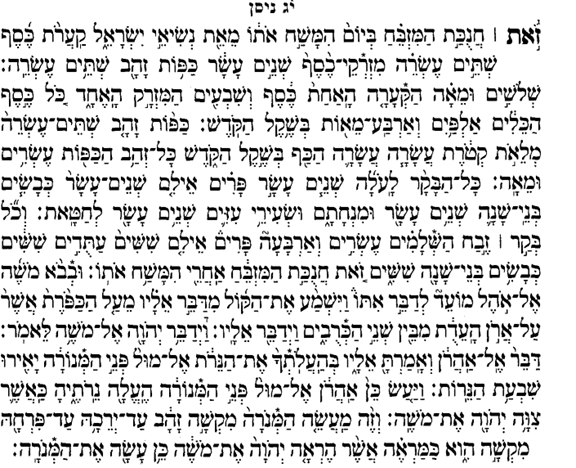
Todays Nassi