

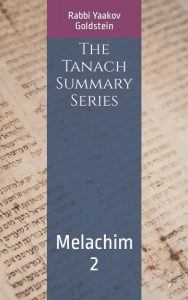
Chapter 12: The reign of Yehoash king of Yehuda
- The age that he became king: Yehoash was seven years old when he became king.
- His year of reign: Yehoash became king in Yeihu’s seventh year of reign [which was the sixth year of the reign of Ataliah[1]].
- The number of years of his reign: Yehoash reigned in Jerusalem for forty years.
- His mother: Yehoash’s mother’s name was Tziviah from Beer sheva.
- His deeds and righteousness: Yehoash was righteous throughout his life and found favor in G-d’s eyes, as he followed all that Yehoyada the priest had instructed him. [However, this righteousness was only until Yehoyada passed away, as after he passed away, Yehoash was turned into a deity by the people of Yehudah, who said that he must be a deity as otherwise he could not survive six years in the holy of holies.[2]]
- The Bamos: The Bamos were not destroyed from the land and thus the people were still accustomed to slaughtering sacrifices and burning incense on the Bamos [even though they were prohibited from doing so and were required to bring all the sacrifices to the Temple].
- Yehoash requested from all of the priests to collect the sanctification funds [i.e. Machatzis Hashekel, Hekdish, etc.[3]] from all of their friends and acquaintances and to keep the money for themselves, in exchange for them promising to fix and repair the temple from their own monies.
- The failure to maintain and repair the temple and the abolishment of the deal: In the twenty-third year of King Yehoash, the priests abstained from maintaining and fixing the damages in the temple, after which King Yehoash summoned Yehoyada the priest and all of the other priests and told them that the deal they made is no longer active. They were given the rights to keep the money of sanctification from their acquaintances in exchange for their maintenance of the temple, and since they have failed to do so, they must therefore cease from taking the money for themselves and rather must give it to the special fund set up for the temple repairs. The priests agreed not to take money from the people and in exchange to no longer be responsible for the temple repairs.
[1] Metzudos Dovid 12:2
[2] Rashi 12:3
[3] Rashi 12:5
Related Articles
📄Daily Tanach – Yoel Chapter 4: The Judgment of the Nations and the Eternal Restoration of Zion
Post Views: 34 Subscribe to Receive PDF 📄 Daily Tanach – Yoel Chapter 4: The Judgment of the Nations and the Eternal Restoration of Zion The Restoration of Judah and the Summoning of the Nations (Yoel 4:1–3) The chapter opens with G-d declaring that the events described will take place
📄Daily Tanach – Yoel Chapter 3: The Outpouring of the Spirit and the Promise of Deliverance
Post Views: 32 Subscribe to Receive PDF 📄 Daily Tanach – Yoel Chapter 3: The Outpouring of the Spirit and the Promise of Deliverance The Universal Outpouring of G-d’s Spirit (Yoel 3:1–2) After the restoration of the land and the people, G-d announces a new stage in His relationship with
📄Daily Tanach – Yoel Chapter 2 – The Day of Hashem, Repentance, and Divine Restoration
Post Views: 36 Subscribe to Receive PDF Daily Tanach – Yoel Chapter 2 – The Day of Hashem, Repentance, and Divine Restoration The Alarm of the Day of the Lord (Yoel 2:1–2) The chapter opens with an urgent command to sound the shofar in Zion and to raise an alarm
📄Daily Tanach – Yoel Chapter 1: A National Disaster and a Call to Repentance
Post Views: 53 Subscribe to Receive PDF Daily Tanach – Yoel Chapter 1: A National Disaster and a Call to Repentance An Unprecedented Disaster to Be Remembered (Yoel 1:1–3) The book opens by identifying the prophecy as the word of the Lord to Yoel son of Pethuel. Yoel calls upon
📄Daily Tanach – Hoshea Chapter 14: Return, Healing, and Lasting Redemption
Post Views: 57 Subscribe to Receive PDF Daily Tanach – Hoshea Chapter 14: Return, Healing, and Lasting Redemption Final Judgment and the Turning Point Hoshea 14 opens with a blunt declaration of guilt against Samaria for rebelling against her G-d. The violence described is extreme and unsettling, making clear that
📄Daily Tanach – Hoshea Chapter 13: Self‑Destruction, Failed Kingship, and Inevitable Judgment
Post Views: 77 Subscribe to Receive PDF Daily Tanach – Hoshea Chapter 13: Self‑Destruction, Failed Kingship, and Inevitable Judgment From Reverence to Ruin (Verses 1–2) When Ephraim once spoke with humility, he was exalted in Israel. But when he turned to Baal, he spiritually “died.” Instead of stopping, Israel: Continued

Leave A Comment?
You must be logged in to post a comment.