Table of Contents
📅 Today in Jewish History
📅 Festival of Megillas Taanis for overcoming the Beitusim[2]
On this day the festival of Shavuos was properly defined as to its correct time which is the 50th day from the harvesting of the Omer, overcoming the claim of the Beitus sect who argued that Shavuos should always follow Shabbat. For this reason from the eighth [of Nisan] onward, and until the end of Shavuos, it was established as a festival period during which eulogies are forbidden.
Background: The Boethusians argued that Shavuos should always follow Shabbat, based on their interpretation. Rabban Yochanan ben Zakkai rebuked their reasoning and cited scriptural verses to demonstrate that the counting of the Omer begins after the first day of Pesach (not the weekly Shabbat) and that Shavuos can fall on any day of the week, depending on the calendar. Other sages, including Rabbi Eliezer and Rabbi Yehoshua, also provided supporting explanations from the Torah, clarifying that the counting is based on the festival and not the weekly Sabbath.
[1] Taken from Megilas Taanis; Luach Davar Beito; Luach Itim Lebina
[2] Megilas Taanis Chapter 1; Taanis 17b
📅 Today’s Yahrzeits
🕯️ Rabbi Eliyahu HaKadosh of York (Avroika) – from the Baalei Hatosafos
🕯️ Rabbi Eliyahu Wolf Shapira of Prague — author of Eliyah Rabbah
🕯️ Rabbi Mordechai ben Rabbi Ber of Neshchiz
🕯️ Rabbi Yaakov Shimon Shapira of Zaslav — son of the holy Rabbi Pinchas of Koretz
🕯️ Rabbi Shlomo ben Yaakov Moussaieff— founder of synagogues in Jerusalem
🕯️ Rabbi Yechiel Michel ben Rabbi Aharon Tokachinsky — rosh yeshiva of Etz Chaim, author of Gesher HaChaim, Bein HaShemashot, Ir HaKodesh VeHaMikdash
👤Their Background[1]
🕯️ Rabbi Eliyahu HaKadosh of York (Avroika) (d. 4856 / 1096) — from the Baalei Tosafos
Rabbi Eliyahu HaKadosh was a Tosafist and Torah scholar in medieval York, England, part of the Tosafist tradition that expanded and deepened Rashi’s commentary on the Talmud. He sanctified G‑d’s Name during the massacres of the First Crusade (1096), when the Jewish community of York was destroyed. His death, together with many other Tosafists, marked one of the most tragic episodes of early Ashkenazic Jewry and became a lasting symbol of faith and sacrifice.
🕯️ Rabbi Eliyahu ben Rabbi Binyamin Wolf Shapira of Prague — author of Eliyah Rabbah
Yahrzeit: 7th Nissan 5472 (14 April 1712)
Rabbi Eliyahu Shapira was a leading posek and darshan in Prague, a disciple of the Magen Avraham, and the author of the classic commentary Eliyah Rabbah on Shulchan Aruch, Orach Chaim. His work became one of the most authoritative Ashkenazic halachic commentaries and is cited extensively by later poskim. He was buried in the Old Jewish Cemetery of Prague.
🕯️ Rabbi Mordechai ben Rabbi Ber of Neshchiz (d. 5560 / 1800)
Rabbi Mordechai of Neshchiz was an early Hasidic tzaddik, known for his humility, sincerity, and inner avodah. He lived during the formative period of Hasidism and is remembered in Hasidic tradition as a quiet but powerful spiritual influence. Though few of his teachings were recorded in writing, he is remembered through Hasidic tradition as a man of sincerity and fear of Heaven, embodying the quiet holiness of early Hasidism.
🕯️ Rabbi Yaakov Shimon Shapira of Zaslav (d. 5591 / 1831) — son of the holy Rabbi Pinchas of Koretz
Rabbi Yaakov Shimon Shapira was the son of Rabbi Pinchas of Koretz, one of the great disciples of the Baal Shem Tov and a foundational Hasidic master. Living in Zaslav, Rabbi Yaakov Shimon continued his father’s legacy of truth, simplicity, and deep faith. He is mentioned in Hasidic sources, including Imrei Pinchas, as part of the inner circle that preserved and transmitted the spiritual path of Koretz Hasidism.
🕯️ Rabbi Shlomo ben Yaakov Moussaieff (5612–5682 / 1852–1922) — founder of synagogues in Jerusalem
Rabbi Shlomo Moussaieff was a prominent Bukharian rabbi, philanthropist, and community leader who made aliyah to Jerusalem in 1888. He was one of the founders of the Bukharian Quarter and built several synagogues there, along with homes for poor families. He devoted his wealth to strengthening Jewish life in Eretz Yisrael and spreading prayer and Torah. His synagogues became enduring centers of communal and spiritual life in Jerusalem.
🕯️ Rabbi Yechiel Michel ben Rabbi Aharon Tokachinsky (d. 5716 / 1956) — rosh yeshiva of Etz Chaim, Jerusalem
Rabbi Yechiel Michel Tokachinsky was among the foremost Torah authorities of Jerusalem in the 20th century. As Rosh Yeshiva of Etz Chaim, he shaped generations of תלמידי חכמים. He authored several classic works, most famously Gesher HaChaim, the definitive halachic guide to mourning and burial customs, as well as Bein HaShemashot and Ir HaKodesh VeHaMikdash on the sanctity and history of Jerusalem and the Temple. His writings remain authoritative and widely studied, and he was buried in Sanhedria, Jerusalem.
[1] Please not that these historical notes were prepared with the assistance of Copilot Pro, an AI Research Agent, and have not been independently verified.
📅 Today in Chabad History
📅 8 Nissan 5680 (1920) — First Mamar of Rebbe Rayatz
On this day, the first maamar of the Rebbe Rayatz, Reishis Goyim Amalek, was delivered, marking the beginning of his public dissemination of Chassidic teachings as Rebbe.
📅 8 Nissan 5699 (1939) — Arrest of the Gaon and Chassid Rabbi Levi Yitzchak Schneerson, father of the Rebbe, of blessed memory
On the night of 9 Nissan 5699, shortly after midnight, loud knocking was heard at the door of Rabbi Levi Yitzchak’s home on Brigadnaya Street in Dnepropetrovsk (Yekaterinoslav). When Rebbetzin Chana opened the door, four NKVD officers stood before her and immediately demanded to know where Rabbi Schneerson was. As she went to inform her husband, the officers followed her inside and stationed themselves by every doorway of the apartment. One of them presented Rabbi Levi Yitzchak with a search warrant and an arrest order.
Without delay, they began a thorough search of the home, examining all the books arranged in five bookcases—works of Kabbalah, handwritten responsa, correspondence, and telegrams from abroad. Everything was scrutinized, packed into bundles, and confiscated. The search continued until six in the morning, after which the officers turned to Rabbi Levi Yitzchak and said: “Rabbi, get dressed and come with us.”
Since the days were those immediately preceding Passover, and understanding that during the festival he would not be able to remain at home, they allowed him to take a small package containing two kilograms of matzah. When the Rebbetzin came the next day to the police station to bring him food, she was told that the prison provides food for all inmates and that the food is kosher according to Jewish law. Moreover, they said to her, “You should know that your husband is not here with us.” In this way they evaded her each time she came to bring him food.
Only after several days did she receive word that her husband was being held in the local prison, and that she was permitted to bring him food and money. After a few more days, the authorities transferred him to the prison in Kyiv, together with criminals who had been convicted of serious offenses.
The holy gaon and chassid Rabbi Levi Yitzchak was arrested by the authorities because they viewed him as one who stood in the place of the Rebbe Rayatz and as someone who encouraged all Jewish activity in Russia. They tried with all their might to prove that he was acting against the regime, and therefore subjected him to the harshest prison conditions, moving him repeatedly from one prison to another. At one point they even placed him in solitary confinement for thirty‑two days, yet he stood firm like an unshakable rock and confessed to none of the false charges that were fabricated against him.
Regarding the imprisonment of Rabbi Levi Yitzchak, an eyewitness who was incarcerated together with him later wrote: Who could withstand such trials? Among the very few who endured them was the crown jewel of the poor, Rabbi Levi Yitzchak Schneerson, of blessed memory. He did not confess, did not sign any accusation, and like a heroic giant he accepted the portion of suffering that fell to him and did not submit. He accepted the judgment of Heaven with love and did not admit to any of the charges brought against him.
Throughout the terrible blood‑soaked frenzy in which millions were ensnared, the rabbi of Yekaterinoslav remained virtually the only one untouched by the fires of Gehenna, unbroken by the heavy hand of oppression. This fact was passed from one prisoner to another like a legendary tale, and in the prisons everyone spoke of him as a man of laughter and faith, from the city of Dnepropetrovsk.
After several months of interrogation, despite the authorities having no conclusive evidence of his alleged activities, they decided to remove Rabbi Levi Yitzchak from all Jewish settlement. His sentence was decreed as five years of exile in Eastern Asia.
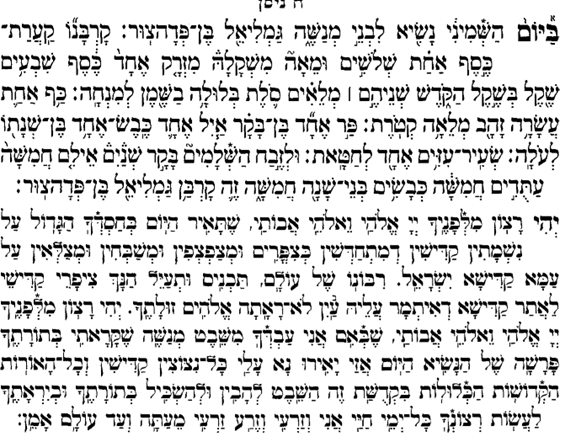
Todays Nassi