This article is an excerpt from our Sefer
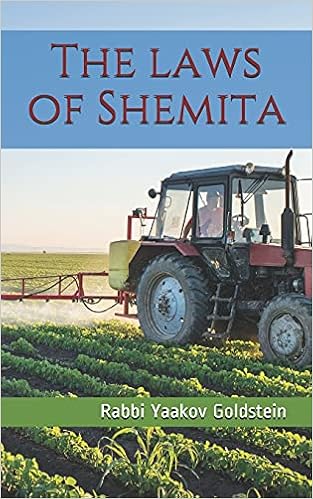
Buy now on Amazon.com
1. Introduction-The Torah verses:
The Torah[1] commands us every seventh year to sanctify the year as Shemita. The Shemita year contains a number of laws and regulations that relate to one’s land, ground produce, and loans.
- Resting the land from work:
- Harvest:[4] One may not harvest the land regularly.
- Food distribution:[5] The food is to be distributed equally to all, including animals. [See Chapter 3 Halacha 9 for the full details of this matter]
- Hefker:[6] The produce of the field is to be completely disowned for all to partake in.
- Loan cancelation:[7] One is also commanded in the Shemita year to annul all loans that he is owed by other Jews.
The reward for keeping the laws:[8] If these laws are guarded, Hashem promises that the land will produce three years’ worth of produce in the 6th year.
The punishment for lack of keeping the laws:[9] Lack of properly keeping the Shemita laws brings exile from the land.
_____________________________________________
[1] Shemos 23:10-11 [Parshas Mishpatim]; 34:21 [Parshas Ki Sisa]; Vayikra 25:1-7 [Parshas Behar]; 26:33-35 [Parshas Bechukosaiy]; Devarim 15:2 [Parshas Re’e]
[2] Vayikra 25:2 and 4 [Parshas Behar]
[3] Vayikra 25:4 [Parshas Behar]
[4] Vayikra 25:5 [Parshas Behar]
[5] Vayikra 25:6-7 [Parshas Behar]
[6] Shemos 23:11 [Parshas Mishpatim]
[7] Re’e 15:2
[8] Vayikra 25:20-21 [Parshas Behar]
[9] Vayikra 26:33-34 [Parshas Bechukosaiy]; Miseches Avos 5:9